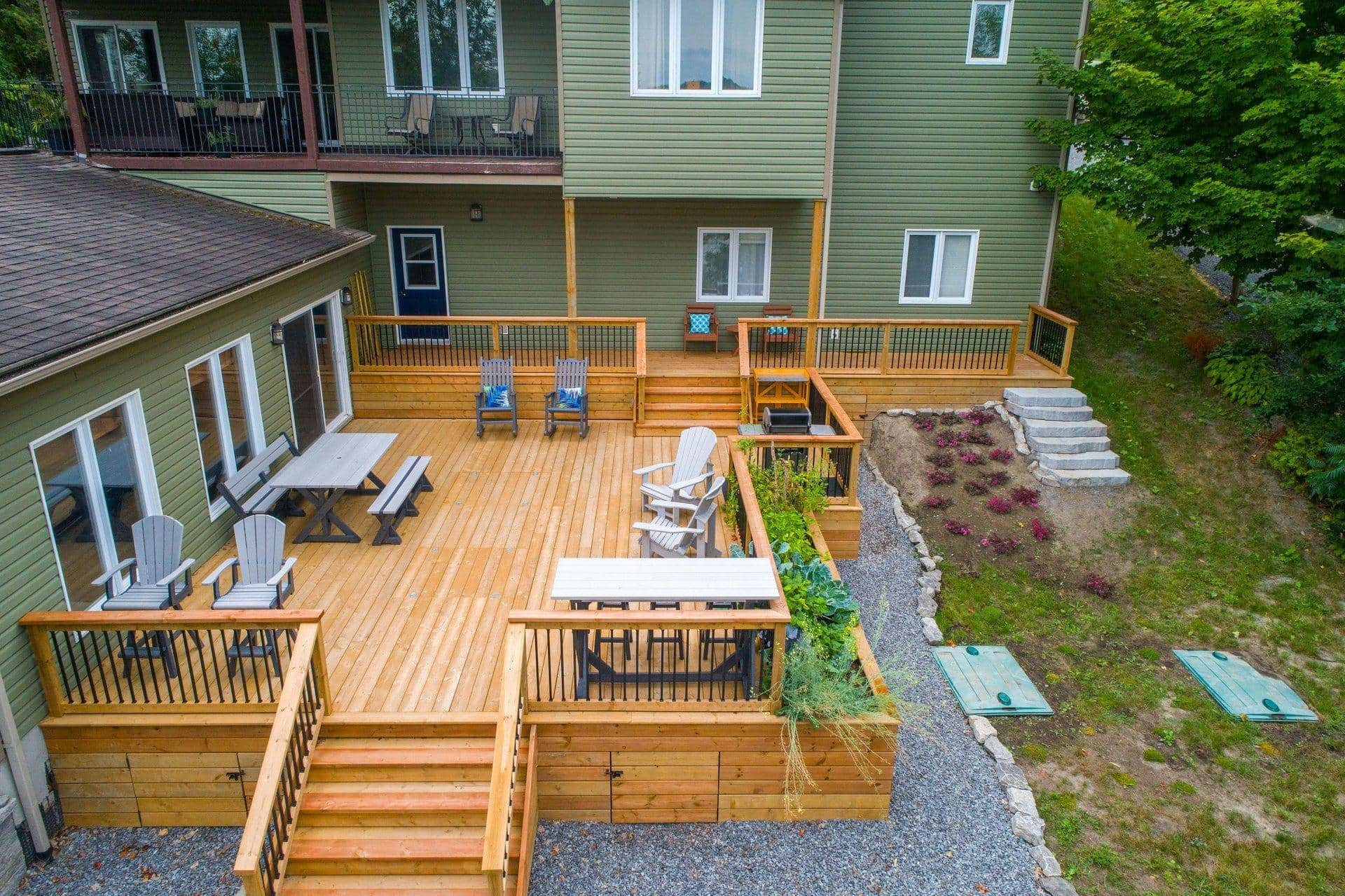
The deck looked fine last summer. This spring you noticed the boards near the steps feel a little soft, the color has faded from honey to gray, and the railing wiggles when you lean on it. None of it happened overnight — it's the cost of one year of nothing.
Deck maintenance has a reputation for being more work than it actually is. Most of the routine is cleaning twice a year, sealing on a schedule, and spending five minutes looking for the small problems before they turn into board replacements. Skip those, and what should be a 25-year deck becomes a 12-year deck — or a structural surprise.
This post covers practical deck maintenance for wood and composite decks: what to clean, how often to seal, what to inspect, and when the job stops being yours.
Recommendations in this post reflect industry consensus from Angi, This Old House, the North American Deck and Railing Association (NADRA), and TimberTech. Always defer to your specific deck material's manufacturer instructions.
Wood vs. Composite: Two Very Different Workloads
Before anything else, know what you have. The maintenance routine is shaped by the material more than anything else.
Wood decks — pressure-treated pine, cedar, redwood, or tropical hardwoods like ipe — need annual cleaning and periodic sealing or staining to hold up against UV, rain, and freeze-thaw cycles. Without that protection, wood grays, cracks, and eventually rots.
Composite and PVC decks — TimberTech, Trex, AZEK, and similar brands — don't need sealing, staining, or sanding. They still need cleaning, and the structure underneath (joists, posts, ledger board) is usually still wood, which means the underside still needs an annual look. The boards themselves are nearly maintenance-free; the deck as a whole is not.
If you're not sure which you have, look at a board edge: composite boards have a uniform, slightly textured surface and no grain you can feel. Pressure-treated wood has visible grain, knots, and small surface checks.
Annual Deck Cleaning
Once a year — ideally in spring, once pollen has dropped and before you spend the summer using the deck — give it a thorough clean.
The basic process is the same for both materials:
- Sweep off leaves, dirt, and debris. Pay special attention to the gaps between boards, where wet leaf litter packs in and holds moisture against the wood.
- Mix a deck cleaner appropriate for your material. For wood, a dedicated wood deck cleaner with sodium percarbonate is the standard. For composite, the manufacturer almost always recommends warm soapy water — harsher chemicals can damage the surface.
- Apply, let it dwell per the label, and scrub with a stiff bristle brush.
- Rinse thoroughly with a garden hose.
A note on pressure washers. They work, but they're easy to misuse. On softwood, too much pressure or too narrow a tip will fuzz the grain and shorten the board's life. Stay above 1,500 PSI, use a 40-degree fan tip, and keep the wand 12 inches off the surface and moving. On composite, follow the manufacturer's pressure limit — usually under 1,500 PSI as well. For most homeowners, a stiff brush and a deck cleaner does the job without the risk.
If you'd rather hand it off, professional deck cleaning runs $0.45–$0.70 per square foot in 2026 — typically $150–$350 for a standard 200–500 square foot deck.
How Often to Seal a Wood Deck
This is the question most homeowners get wrong. The answer depends on the product and the exposure.
- Clear sealers — every 1 year. They protect against water but offer little UV protection and wear off fast.
- Semi-transparent stains — every 2–3 years. The pigments shield the wood from sun damage and last meaningfully longer.
- Solid stains — every 3–5 years. The most protective, but they look like paint and hide the grain.
Climate shifts the schedule. Decks in hot, sunny climates or areas with heavy snow may need resealing every 18 months. North-facing or shaded decks can sometimes stretch to four years.
The water test tells you when. Sprinkle a cup of water across the boards. If the water beads up and rolls off, the sealer is still doing its job. If it soaks straight in within a few minutes, the deck is overdue.
Sealing itself is a one-day project for most decks: clean, let dry for 48 hours, apply two thin coats with a roller or sprayer following the wood grain. The hardest part is the timing — you need two or three dry, mild days in a row, which is why people put it off and forget about it.
The Five-Minute Deck Inspection
Once a year, walk the deck slowly and look for the things that matter. Most of this is structural, not cosmetic, and the goal is to catch problems while they're cheap to fix.
- Boards. Step on every board. Soft, spongy, or cracked boards need to be replaced. Pay extra attention to boards near the house, around posts, and at the stairs — these stay wet longest.
- Railings and balusters. Grab and shake each section of railing. It should feel solid. A wobbly railing is a fall hazard, full stop.
- The ledger board. This is the horizontal board bolted to your house that the deck hangs off. It's the single most failure-prone part of any attached deck. Look for rust on the bolts, gaps between the board and the siding, missing or failed flashing above it, and any soft or stained wood.
- Posts and joists (from underneath, if accessible). Push a flathead screwdriver into the wood at the base of each post. If it sinks in more than a quarter inch with light pressure, you have rot. Healthy wood resists the screwdriver.
- Fasteners. Popped nails, missing screws, rusted hardware. Tighten or replace as needed.
- Drainage underneath. Leaves, mulch, or stored items piled against posts hold moisture and accelerate rot. Clear the area under the deck.
When to Call a Pro
Cleaning, sealing, and tightening loose railing hardware are all reasonable homeowner jobs. The structural problems are not. Call a licensed contractor or deck builder if any of the following turn up:
- Ledger board issues. Rotted ledger, missing flashing, or loose bolts on the ledger are deck-collapse risks. NADRA tracks ledger failures as the leading cause of deck collapse. This is not a DIY repair — it ties into the framing of your house.
- Soft, rotted, or compromised posts or joists. Anything carrying the deck's weight that fails a screwdriver test needs a professional assessment.
- A deck that's clearly leaning, sagging, or pulling away from the house. Stop using it and get someone out there.
- Decks more than 15 years old that have never had a professional inspection. Most deck failures happen on decks built before modern code, especially before the 2009 update to ledger connection standards.
A licensed deck inspection runs $100–$300 in most markets and is money well spent on any older deck. It's also worth having one done before you list a home for sale or host a party with more than the usual number of guests on the deck.
Track It in Mintain
The annual schedule is what saves you from the gray, soft, wobbly deck. Add Deck Cleaning as a custom annual task in Mintain, set for early spring. Add Deck Sealing as a custom task and set the interval to match your product — 1, 2, or 3 years. Add Deck Inspection as another annual task, ideally pinned to the same spring weekend so it all happens in one trip outside.
Store the brand and color of your stain in the notes field. Three years from now, when it's time to seal again, you won't have to guess.
Start tracking your home maintenance for free at mintain.app →
If you're working through the broader seasonal list this spring, Spring Home Maintenance: 10 Tasks You Shouldn't Skip This Year covers the deck alongside the other nine.
This is part of Mintain's weekly maintenance blog. Every Monday, we publish a new guide to help you stay ahead of home, auto, yard, and equipment maintenance — so nothing catches you off guard.