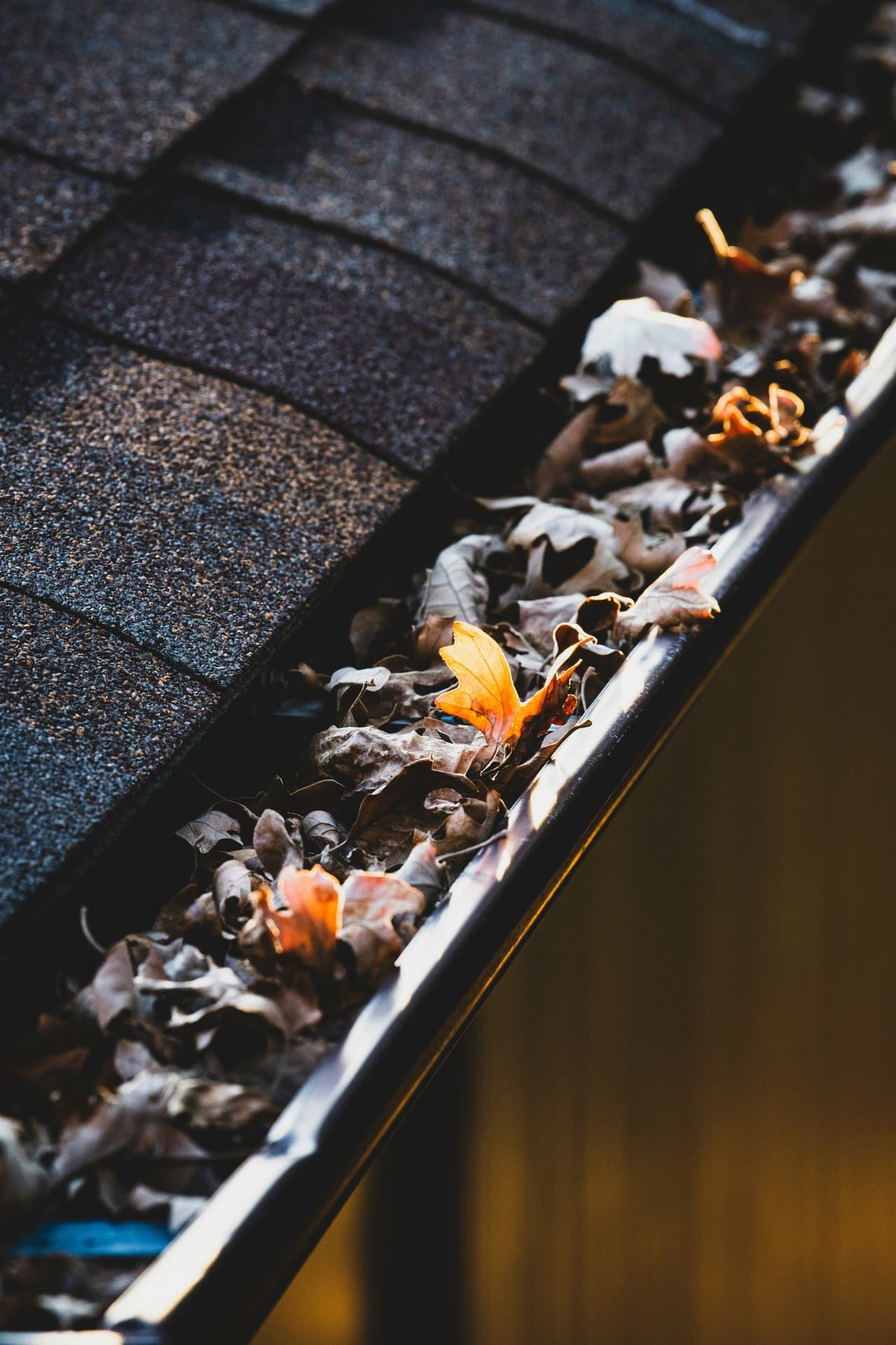
A clogged gutter doesn't announce itself. The first sign is usually a water stain on a ceiling, a streak of mud along the foundation, or a damp basement after a hard rain — by which point the gutter has been failing for a while.
Gutters do one job: move roof water away from your house. When that stops happening, the water still has to go somewhere — and it goes to places that cost real money to fix. Twice-a-year cleaning is the cheapest insurance against all of it.
This post covers how often most homes need gutter cleaning, what to look for while you're up there, what professional service costs, and the safety call that decides whether you DIY or hire it out.
Recommendations in this post reflect industry consensus from This Old House, Angi, and the U.S. Department of Housing and Urban Development. Safety statistics are from the Centers for Disease Control and Prevention.
How Often Should You Clean Your Gutters?
For most homes, the answer is twice a year — once in spring and once in fall. That cadence handles the two natural debris cycles: winter leftovers and pollen in the spring, then the heavy leaf drop from October into November.
A few situations call for more frequent cleaning:
- Tall trees within 20–30 feet of the house — especially pine, oak, or maple. Needles and seed pods can clog gutters every 2–3 months during peak shed.
- Recent storms with heavy wind. Branches, shingle granules, and tree debris can fill a gutter in a single afternoon.
- A house surrounded by mature trees. Some homes realistically need quarterly cleaning to stay ahead of it.
Gutters with leaf guards or screens still need annual inspection. The guards reduce the volume of debris that gets in but don't eliminate it — fine sediment, shingle grit, and small seed pods still accumulate underneath.
Spring vs. Fall: Why Each One Matters
Fall is the higher-stakes cleaning. Late October through early November, after most leaves have dropped, is the critical window. Debris left in the gutters over winter freezes into ice dams that lift shingles, pry fascia loose, and back water up under the roof line. The Northeast and Midwest see the worst of this — but anywhere with a hard freeze is at risk.
Spring is the inspection cleaning. It clears winter-blown twigs, pine needles, and decomposing leaf mulch that escaped the fall cleaning. More importantly, it's the chance to spot any winter damage — separated seams, sagging sections, loose fasteners — before the heavy spring rains arrive. Caught now, most of it is a quick fix. Caught after a thunderstorm dumps two inches of water against your foundation, it's a different conversation.
What Happens When You Skip It
Clogged gutters overflow down the side of the house, and the damage compounds in a few predictable directions.
- Fascia and soffit rot. Water spilling behind the gutter saturates the wood it's bolted to. Paint peels, wood softens, the gutter pulls away.
- Roof leaks. Standing water at the eaves wicks back under the shingles and into the attic. Stained ceilings are usually the first interior sign.
- Foundation cracks and basement water. Water pools at the base of the house instead of leaving through the downspout. The U.S. Department of Housing and Urban Development cites clogged gutters as a leading contributor to indoor mold and mildew.
- Pest habitat. Wet leaf mulch is a mosquito breeding ground in summer and a nest spot for birds, squirrels, and wasps the rest of the year.
While You're Up There, Check These
A gutter cleaning is also a five-minute roof and exterior inspection — make use of the view.
- Gutter slope. Water should run toward the downspout, not pool in the middle. A gutter holding standing water after a flush has settled and needs to be re-pitched.
- Seams and end caps. Look for rust, sealant failure, or visible drips during the flush.
- Downspout flow. Run water down each one with a hose. Slow drainage or backup means a clog inside the downspout itself.
- Fascia and soffit. Soft spots, peeling paint, or visible rot are signs that water has already been escaping for a while.
- Shingles at the edge. Curled, cracked, or missing shingles along the eaves are a roofer's call, not a gutter cleaner's.
DIY Tools and Methods
If you're going up the ladder yourself, hand-scooping from a stable extension ladder is the standard approach — it's what professionals do, with better ladders and harnesses. A plastic scoop (or a cut-down laundry detergent bottle), a bucket on a hook, and a garden hose for the final flush is the whole toolkit.
A few ground-level alternatives are worth knowing:
- Leaf blower with a gutter attachment. Works for dry, loose debris only. Useless on wet leaves, pine needles packed in, or anything that's been sitting.
- Wet/dry shop vacuum with a gutter wand. Effective on lighter debris from the ground for single-story homes. Heavy clogs still need a scoop.
- Telescoping gutter cleaning tool. Generally awkward for thorough work but fine for a quick clear-out between proper cleanings.
None of these ground-level methods replace an actual cleaning. They're maintenance between the twice-a-year service.
When to Call a Pro
For many homeowners, this isn't a job worth doing yourself. The CDC tracks roughly 20,000 ladder injuries per year tied specifically to gutter cleaning — and 97% of all ladder falls happen to homeowners on DIY projects, not professionals.
Call a pro if any of the following apply:
- You have a two-story or three-story house. Ladder height is the single biggest fall-risk factor.
- The ground around your house is uneven, sloped, or soft. A ladder needs flat, firm footing.
- You don't already own an extension ladder rated for your roof line. Buying one for a once-a-season job rarely pencils out.
- You're not steady on a ladder. Balance issues, recent surgery, vertigo, fear of heights — all good reasons to hand this off.
- You see active damage from the ground. Sagging sections, separated seams, or water-damaged fascia mean repair work, not just cleaning.
If you have severe pest activity in your gutters — bees, wasps, large nests — call a pest control service before anyone cleans them.
What Professional Gutter Cleaning Costs
National pricing in 2026 runs $0.95–$2.25 per linear foot, with most homeowners paying between $120 and $235 for a typical single-story to two-story home. The variation comes from a few factors:
- Height. A one-story ranch runs about $0.95–$1.25 per linear foot. A two-story runs $1.00–$1.85. Three stories runs $2.10–$3.45 because the ladder requirements are different.
- Gutter guard removal. Some companies charge extra if leaf guards have to come off and back on.
- Condition. A gutter that hasn't been cleaned in three years takes longer than one done last fall.
- Add-ons. Downspout flushing, soft-washing the gutters' exterior, and gutter repair are often quoted separately.
Larger homes (200+ linear feet) typically run $200–$525 per service. An annual contract with a single provider covering both the spring and fall visits often comes in lower per visit than two one-off calls.
Track It in Mintain
The hardest part of gutter cleaning isn't the cleaning — it's remembering twice a year, every year, in a season when there's already a lot going on. Add the Gutter Cleaning template to your home in Mintain and set the reminder for early spring and late fall. The notification arrives a few weeks before you actually need to do it, which is enough lead time to schedule a service or block a Saturday morning.
If you also want to track the bigger-picture exterior items, the Roof Inspection template (annually) and the Foundation Walk-Around template (annually) pair well with gutter cleaning — they're all checks on the same water-management system.
Start tracking your home maintenance for free at mintain.app →
If you're working through the broader seasonal list this spring, Spring Home Maintenance: 10 Tasks You Shouldn't Skip This Year covers gutters alongside the other nine.
This is part of Mintain's weekly maintenance blog. Every Monday, we publish a new guide to help you stay ahead of home, auto, yard, and equipment maintenance — so nothing catches you off guard.