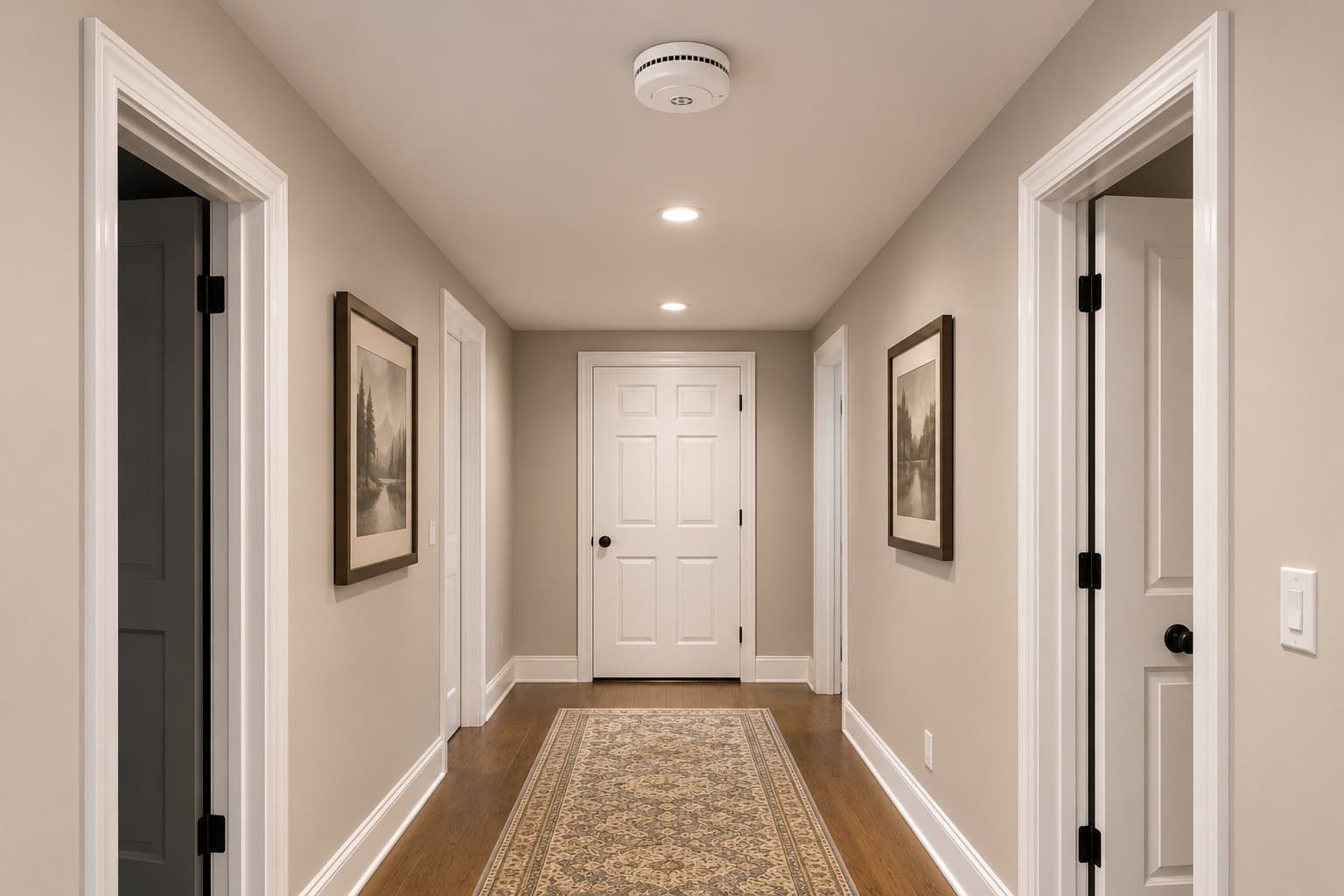
The smoke alarm in the hallway chirped once at 2 a.m. about six months ago. You climbed up, took the battery out to make it stop, and meant to put a new one in the next day. The alarm has been sitting there silently ever since.
Most homes have smoke and carbon monoxide alarms that nobody has touched in years. The batteries are dead, or the unit itself has aged past its useful life, or the placement was never right to begin with. None of it is hard to fix — but knowing how often to do what, and where everything is supposed to live, takes about ten minutes of reading and an hour of walking around the house.
This post covers smoke detector battery replacement, how often to test, where CO alarms belong, and when it's time to replace the whole unit.
Guidance in this post reflects the National Fire Protection Association (NFPA 72), the U.S. Fire Administration (USFA), the Consumer Product Safety Commission (CPSC), and the published recommendations of Kidde and First Alert. Local codes may be stricter — check yours.
How Often to Test, Replace Batteries, and Replace the Unit
The three intervals everyone confuses, in one place:
- Test each alarm — monthly. Press the test button until the alarm sounds. That's it. The test confirms the horn, the battery, and the basic electronics. NFPA 72 calls for monthly testing.
- Replace the batteries — every 6 months. A common rule of thumb is "when you change the clocks" — March and November. If your alarm uses a 10-year sealed lithium battery, skip this step; the battery is the same age as the alarm and replaced with it.
- Replace the whole smoke alarm — every 10 years. Sensors degrade over time. The NFPA and every major manufacturer recommend replacing the unit ten years from the date stamped on the back. Most homeowners discover their alarms are 15 or 20 years old when they finally look.
- Replace the whole CO alarm — every 5 to 10 years, depending on model. First Alert and Kidde both stamp the replace-by date on the unit itself. Older CO sensors typically lasted 5–7 years; newer models often go 10. Check the back of yours; don't guess.
If your smoke alarm chirps once every 30–60 seconds, it's almost always one of two things: a low battery (replace it) or end-of-life (replace the unit). Both alarms use similar chirps — the manual that came with the unit, or a quick search by model number, tells you which is which.
Where Smoke and CO Alarms Belong
Placement matters as much as testing. The NFPA standard for residential alarms is straightforward:
Smoke alarms:
- One inside every bedroom.
- One outside each sleeping area — in the hallway directly outside the bedrooms.
- One on every level of the home, including the basement and any finished attic.
Carbon monoxide alarms:
- One outside each sleeping area.
- One on every level of the home, including the basement.
- One within 10 feet of any bedroom door if you have an attached garage, gas appliances, a fireplace, or a fuel-burning furnace anywhere in the house.
You can buy combination smoke/CO units that cover both requirements in a single device, which is what most newer homes use.
A few placement notes that catch people out:
- Smoke alarms go on the ceiling, or high on the wall (within 12 inches of the ceiling). Smoke rises — putting one low is the same as not having one.
- Keep smoke alarms at least 10 feet from cooking appliances to cut down on false alarms from steam and toast.
- CO alarms can go at any height. The gas mixes evenly with air. Manufacturer instructions are the final word, but waist or chest height near a sleeping area works for most plug-in models.
- Don't put any alarm in a bathroom, in a garage, within 3 feet of a ceiling fan, or within 3 feet of an HVAC supply vent. False alarms or missed alarms follow.
How to Tell How Old Your Alarms Are
Pull each one down and look at the back. Every smoke and CO alarm sold in the U.S. has a manufacture date or a replace-by date printed on it. It's a small stamped or printed date, usually near the model number.
- If the manufacture date is more than 10 years ago on a smoke alarm — replace the unit. Don't bother with a new battery.
- If the replace-by date on a CO alarm has passed — replace it. The sensor inside has aged out even if the alarm is still chirping the test tone.
- If there's no date at all — assume it's older than 10 years and replace it. Date stamps became standard after 2002.
A basic smoke alarm runs $15–$30. A combination smoke/CO alarm with a 10-year sealed battery runs $40–$60. For a typical three-bedroom home, replacing every alarm with combo units costs $200–$400 including a couple of fresh batteries for any older units you decide to keep for now.
Battery Type Matters
Most alarms take a 9V battery or two AA batteries — check the back of yours before going to the store. A few quick tips:
- Don't mix battery brands in a single alarm that takes more than one cell.
- Don't use rechargeables. Their voltage curve doesn't match what the alarm expects, and the low-battery chirp may not trigger until it's too late.
- The 10-year sealed lithium units are worth the extra few dollars. No more 2 a.m. chirps. When the alarm hits end of life, the whole thing comes down and goes in the trash.
What Triggers a CO Alarm (And What to Do When One Goes Off)
A CO alarm sounding is not the same as a smoke alarm. You can't see, smell, or taste carbon monoxide. If one goes off:
- Get everyone outside into fresh air. Don't open windows and "ventilate" — leave.
- Call 911 or your local fire department from outside the house. They'll come with a meter and tell you whether it's a real reading or a faulty alarm.
- Don't go back in until they say it's safe. Even if symptoms feel mild (headache, dizziness, nausea), CO poisoning is cumulative and worsens with time.
The CPSC reports roughly 400 deaths and 100,000 ER visits from non-fire CO poisoning every year in the U.S. The vast majority happen in homes without a working CO alarm.
When to Call a Pro
Most of this you can handle. Press the button, change the battery, swap the whole unit when the date says so. The reasons to bring someone in:
- Hardwired alarms that won't stop chirping after a new battery and a power cycle. Hardwired units often have a backup battery and an interconnect wire that runs to other alarms in the house. If the chirp doesn't stop, call an electrician — $100–$200 for a service call to diagnose and replace.
- Any CO alarm sounding when you can't identify the source. Get the fire department out first, then a licensed HVAC technician to inspect the furnace and water heater. A cracked heat exchanger is the most common cause and the most dangerous.
- No alarms at all in an older home. If you've moved into a place built before 1990, there may be no smoke alarm circuit at all. A licensed electrician can quote interconnected hardwired alarms for the whole house — typically $50–$120 per location, more if there's no existing wiring to tap into.
Track It in Mintain
The reason these get missed isn't that they're hard. It's that they're invisible until they fail. Mintain's safety templates handle the schedule for you:
- Smoke Detector Test — monthly
- Smoke Detector Battery Replacement — every 6 months
- Smoke Detector Replacement — every 10 years
- Carbon Monoxide Detector Test — monthly
- Carbon Monoxide Detector Replacement — every 6 years (adjust to match your unit's stamped replace-by date)
Add all five at once when you set up your home in Mintain. Store the brand, model number, and manufacture date in the notes field — the next time something chirps at 2 a.m., you'll know exactly what battery it takes and how old it is.
Start tracking your home maintenance for free at mintain.app →
If you're working through the broader checklist this spring, Spring Home Maintenance: 10 Tasks You Shouldn't Skip This Year lists the safety items alongside the rest of the season's work.
This is part of Mintain's weekly maintenance blog. Every Monday, we publish a new guide to help you stay ahead of home, auto, yard, and equipment maintenance — so nothing catches you off guard.