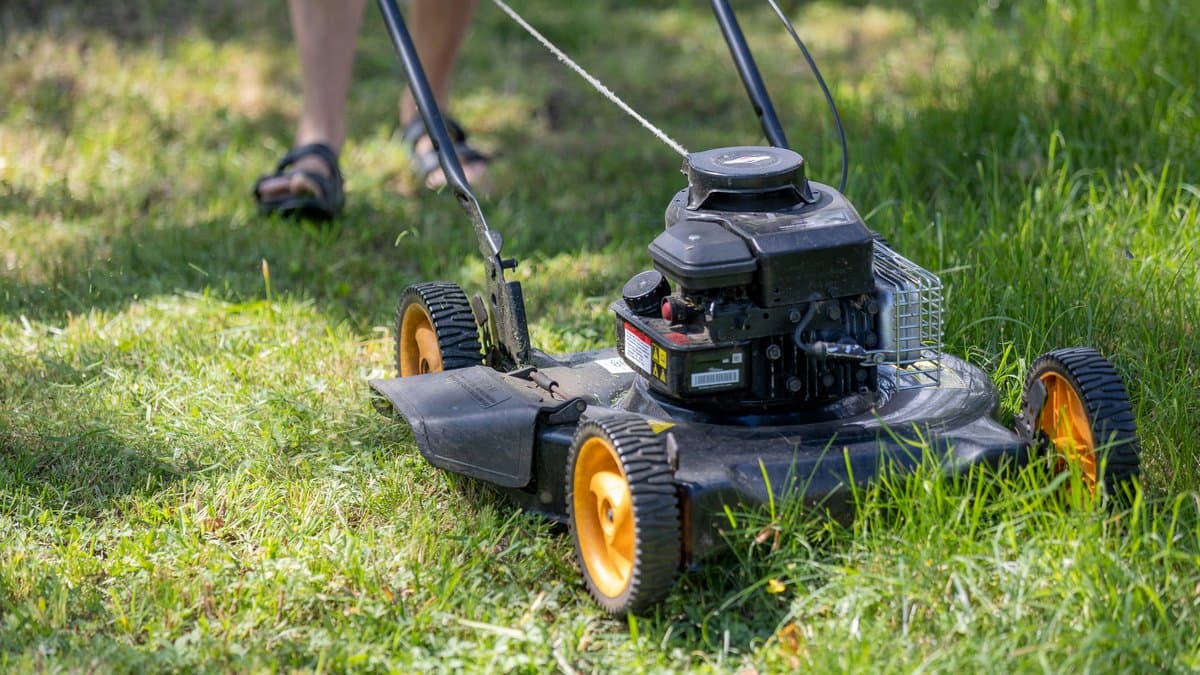
First warm weekend of the year. You roll the mower out of the garage, give the cord a pull — and find out real fast whether you took care of it last fall.
Spring mower startup goes one of two ways depending on what you did before putting it away. This guide covers both: a quick checklist if you winterized properly, and a catch-up plan if you didn't.
Service intervals reflect manufacturer guidelines from Briggs & Stratton, Honda, and Husqvarna as of early 2026. Always consult your owner's manual — recommendations vary by engine and model.
If You Winterized in the Fall, Here's Your Spring Checklist
If you ran stabilized fuel or drained the tank, changed the oil, and stored the mower in a dry space, you're in good shape. Spring startup should take about 10 minutes:
- Check the oil level. Top off if needed. No change required if you changed it before storage.
- Inspect the air filter. Give it a look — if it sat in a dusty garage all winter, it may have collected debris.
- Look at the blade. If you sharpened it before storing, a quick visual check is enough. Any new nicks from last season's last mow? Take care of it now.
- Add fresh fuel. Even stabilized fuel has a shelf life — if it's been more than 12 months, drain and refill. Otherwise, top off and go.
- Start it up. If it starts cleanly and runs smoothly, you're ready.
That's it. The rest of this article is for everyone who skipped the fall prep.
If You Skipped Fall Winterization, Here's How to Catch Up
No judgment — most people don't winterize their mowers. Here's what to check before the first cut of the season.
1. The Fuel
This is the most common reason a mower won't start in spring. Gasoline with ethanol — which is most pump gas today — degrades in as little as 30 days and can leave varnish deposits in the carburetor if it sits over a long storage period.
What to do: If there's old fuel in the tank from last fall, drain it completely before adding fresh gas. Don't try to dilute it — just get it out.
If the mower runs rough or surges after fresh fuel: You likely have a partially gummed carburetor from the old fuel. A fuel system additive like Sea Foam added to fresh fuel sometimes clears it up. If not, a small engine shop can clean the carburetor for $50–$100.
Going forward: Add a fuel stabilizer like Sta-Bil to your gas can at the start of each season. It extends fuel life significantly and makes this problem go away.
2. The Oil
Small engine oil breaks down over time. If the mower sat all winter with last season's oil in it, spring is a reasonable time to change it — though it's worth noting that most manufacturers recommend an oil change every 50 hours of operation or annually, whichever comes first. If you only mow 10–15 hours a year, you're not necessarily overdue by hours, but fresh oil at the start of a new season is still good practice.
What to use: Check your owner's manual first. Most modern small engines accept SAE 30, 10W-30, or synthetic 5W-30 — manufacturer recommendations have evolved and many newer engines explicitly approve synthetic 5W-30. The old "SAE 30 only" rule was largely for older carbureted engines. When in doubt, the manual is the authority.
Expected cost: $5–$10 for a small bottle of the correct oil.
When to call a pro: If you're not comfortable draining and refilling the oil yourself, a small engine shop handles full spring service — oil, plug, filter, blade — for $50–$100. That's a reasonable investment for a machine you'll use weekly for six months.
3. The Spark Plug
A worn or fouled spark plug is one of the most common reasons a mower starts poorly or not at all. Plugs are inexpensive and easy to swap, so it's a reasonable first move if you're troubleshooting a hard-start problem.
Manufacturer intervals: Most small engine manufacturers recommend spark plug replacement every 100 hours of operation or annually, whichever comes first. If you're mowing 10–15 hours a year, you're nowhere near 100 hours — but if the plug has been in there for several seasons and hasn't been inspected, it's worth a look.
What to look for: Pull the plug and examine the ceramic insulator. Light tan or gray means it's in good shape. Black carbon buildup, white chalky deposits, or a worn electrode means it's time for a new one. A new plug costs $3–$8 at any hardware store.
If you're troubleshooting a no-start: Try a fresh plug before anything else. It's the cheapest and easiest thing to rule out.
4. The Air Filter
The air filter keeps dust and debris out of the engine. After a full season of mowing plus a winter in storage, it's worth checking.
What to do: The filter cover is usually accessible without tools — it snaps or unscrews off the side of the engine. Foam filters can sometimes be washed with warm soapy water, dried completely, and lightly re-oiled. Paper filters can't be washed — if they're gray with dust or visibly deteriorated, replace them. A new filter runs $5–$15.
5. The Blade
A dull blade tears grass instead of cutting it — the tips turn brown and the lawn looks stressed even after a fresh mow. This one gets skipped more than any other item.
What to do: Disconnect the spark plug wire before touching the blade — always. Tip the mower on its side (carburetor-side up) and inspect the cutting edge. Look for nicks, dullness, or any bending.
A blade in decent shape can be sharpened with a file or a drill-mounted attachment in about 10 minutes. A blade that's bent, cracked, or deeply gouged should be replaced entirely — a bent blade causes vibration that can damage the engine over time.
Expected cost: Sharpening at a small engine shop runs $10–$20. A replacement blade is $15–$40 depending on the mower.
Riding Mowers: Check the Battery
If you have a riding mower or lawn tractor and didn't use a battery tender over winter, check the battery before you need it. Batteries that sit uncharged all winter can sulfate and lose capacity permanently.
A fully charged 12V battery should read 12.6V or higher at rest. Below 12.2V means it needs a charge. If it won't hold a charge, it needs replacement. If there's corrosion on the terminals, a battery terminal brush — the small wire brush tool that twists over the post and cleans the inside of the clamp — handles it in under a minute. For heavy buildup, a baking soda-and-water solution neutralizes the acid before brushing.
Expected cost: Replacement batteries run $30–$80. A trickle charger ($25–$50) connected over next winter will extend battery life significantly and take this off the spring checklist for good.
The Real Lesson: Fall Is When This Gets Easy
If you're doing all of this in spring, you're not doing anything wrong — you're just doing it reactively. The mower works best when the oil is changed while the engine is warm at the end of the season, the blade is sharpened before it sits for months, and the fuel is stabilized or drained before storage.
We'll cover the full fall winterization checklist later this year — if you add your mower to Mintain now, it'll remind you in October before the mower gets put away.
Add Your Mower to Mintain
Mintain has dedicated template sets for both push mowers and riding mowers. Add your mower, apply the Push Mower Service or Riding Mower / Lawn Tractor Service templates, and Mintain will remind you each season — spring startup and fall storage — so nothing gets skipped.
Store your spark plug part number, oil capacity, and blade size in the notes field. No more standing in the hardware store trying to remember the model number.
Free for up to 4 items. Pro is $1/month or $10/year if you need more.
Add your mower to Mintain at mintain.app →
If you're tackling spring maintenance across the whole property, check out Spring Home Maintenance: 10 Tasks You Shouldn't Skip This Year — it covers gutters, HVAC, smoke detectors, and more.
Common Questions
What oil should I use in my lawn mower? Check your owner's manual — it's the only reliable answer. Most modern small engines accept SAE 30, 10W-30, or synthetic 5W-30. Many manufacturers including Briggs & Stratton and Honda now explicitly approve synthetic 5W-30. The old "SAE 30 only" guidance was for older engines. When in doubt, the manual is the authority.
How often should I replace the spark plug? Most small engine manufacturers recommend every 100 hours of operation or annually, whichever comes first. If you mow 10–15 hours per year, you're unlikely to hit 100 hours for many seasons — but if you're troubleshooting a hard-start or the plug hasn't been inspected in a few years, it's worth pulling and checking. They cost $3–$8 and take 10 minutes to swap.
How do I know if my mower blade needs replacing vs. just sharpening? A blade with minor dullness or small nicks can be sharpened. A blade that's bent, cracked, or has deep gouges should be replaced. A bent blade causes dangerous vibration and should never be sharpened — replace it.
What happens if I mow with old, degraded fuel? Rough running, surging at idle, and hard starting are the symptoms. The longer-term problem is deposits that build up in the carburetor jets. If you drained the tank before storage, you're fine. If old fuel sat in the tank all winter, drain it completely before adding fresh gas and expect to troubleshoot if the carb has already been affected.
This is part of Mintain's weekly maintenance blog. Every Monday, a new guide to help you stay ahead of home, auto, yard, and equipment maintenance.