The most expensive AC repair is the one you could have prevented. And the worst time to find out something's wrong is when you actually need it.
A central air conditioner that runs all summer without any attention is working harder than it should — using more electricity, wearing faster, and building toward a breakdown. AC maintenance before summer, done now while the weather is still comfortable, keeps the system running right when the heat actually arrives.
This post covers five things to do before you turn the AC on for real this year — four you can handle yourself in under an hour, and one phone call worth making.
AC service recommendations in this post reflect guidance from Carrier, the U.S. Department of Energy, and ENERGY STAR. Cost ranges reflect national averages for 2026.
Why AC Maintenance Before Summer Matters
A central air conditioner that hasn't been serviced runs 10–15% less efficiently than a properly maintained one, according to the U.S. Department of Energy. On a $200/month summer cooling bill, that adds up to real money over a season. More practically: dirty coils, a blocked condenser, or low refrigerant don't announce themselves. They just make the system work harder and harder until something fails.
The most common summer complaint is an AC that runs constantly but never quite cools the house down. That's usually a sign of something a spring tune-up would have caught and corrected.
Warning Signs to Watch For
Before you get started, run through these quick checks. If any of these apply to your system, mention them when you call for a tune-up — they give the technician a head start.
- Last summer, rooms felt warm even with the AC running. Could be airflow, refrigerant, or coils.
- Your utility bills were higher than expected. An inefficient system runs longer to reach the same temperature.
- You heard unusual sounds — grinding, rattling, or banging. Could be debris in the unit or a failing part.
- Ice formed on the outdoor unit or the refrigerant lines. That's a sign of airflow restriction or low refrigerant.
- It's been more than two years since a professional looked at it. Annual service is the standard recommendation.
None of these are emergencies now. All of them are worth flagging.
Step 1: Clear Debris From the Outdoor Unit
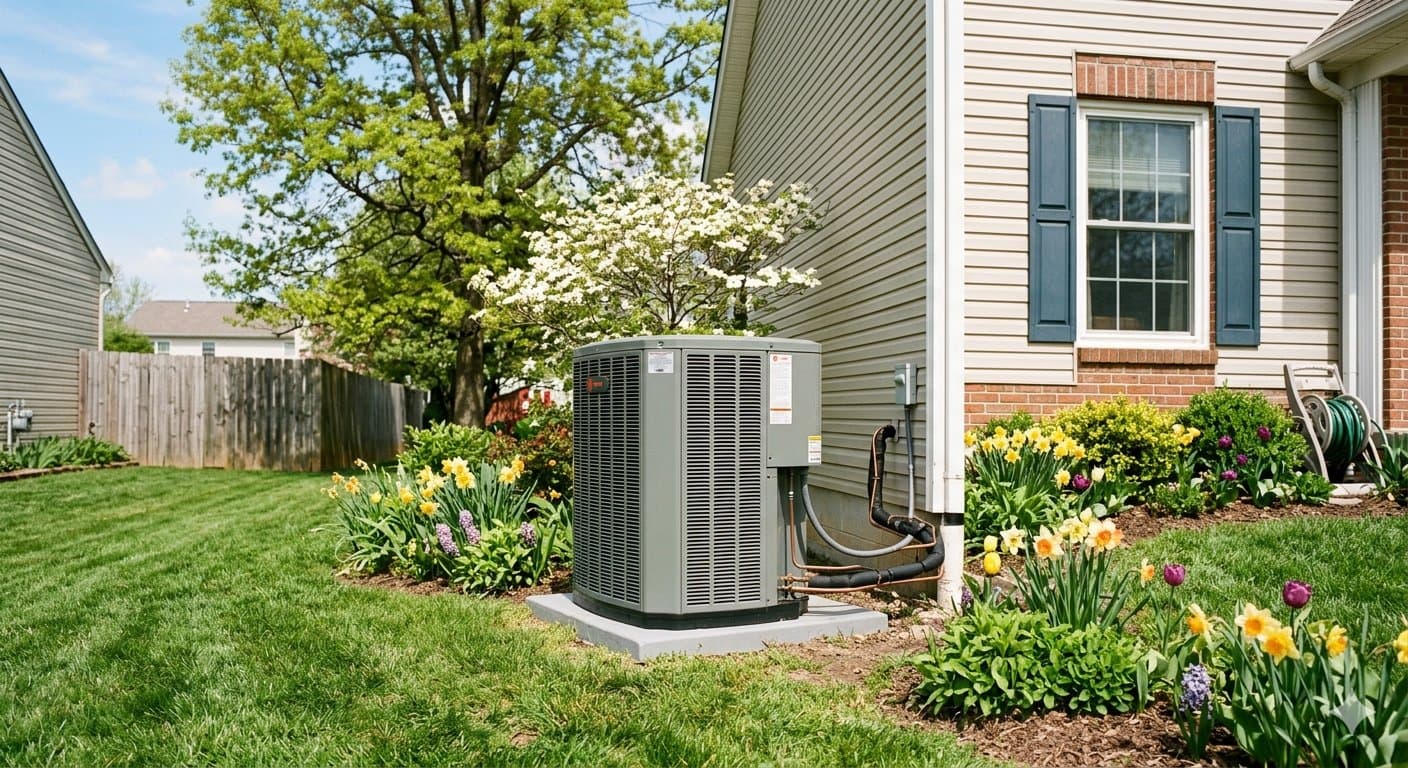
The outdoor condenser unit — the box that sits beside or behind your house — pulls air through its fins to release heat from your home. After a winter of sitting idle, leaves, twigs, mulch, and other debris build up around and inside it.
What to do:
- Turn off power at the disconnect box or breaker before touching the unit.
- Remove any leaves, branches, or debris from inside the top and sides of the housing.
- Pull back shrubs, overgrown grass, or vines that have grown close. Clear at least two feet of open space on all sides — that clearance is what allows air to flow.
- Gently rinse the fins with a garden hose at low pressure, spraying from the inside out to push debris out. Never use a pressure washer — the aluminum fins are delicate and will crush.
If the fins are bent, a fin comb (available at any hardware store for under $15) can straighten them. Bent fins restrict airflow just like debris does.
Step 2: Check Your Air Filter
A clogged filter is the single most common reason an AC system works inefficiently. Before the cooling season starts, pull the filter and look at it. If it's visibly gray with dust, replace it.
We covered filter types, MERV ratings, and how often to change them in last week's post. The short version: standard 1-inch pleated filters every 60–90 days; sooner with pets or allergies.
Step 3: Test Your Thermostat
Before the first real hot day, confirm the system actually responds. You want to know now, not in June.
What to do:
- Set the thermostat to cooling mode.
- Set the target temperature a few degrees below the current room temperature.
- Wait — you should hear the outdoor unit start within a minute or two and feel cold air from the vents within 10–15 minutes.
If the air isn't cold, or the system starts and stops rapidly: That's worth investigating before the heat arrives. A technician in April has a much shorter wait time than one in July.
If you have a programmable or smart thermostat, spring is also a good time to update the schedule. Your cooling-season hours are different from your heating-season ones — if the schedule hasn't been touched since fall, it probably needs adjusting.
Step 4: Check the Condensate Drain Line
Your AC removes humidity from your home as it cools, and that moisture has to go somewhere. It drains away through a condensate drain line — usually a white PVC pipe exiting the indoor air handler. Over time, algae and mold build up inside the line and can cause a clog. A backed-up drain means water overflowing into the drain pan, and potentially onto your floors or into your walls.
What you can check yourself: Find where the drain line exits outside and look for a steady drip when the system is running. Dripping = draining. No drip on a hot day when the AC has been running = worth mentioning to a technician.
What a pro handles: Flushing the condensate drain is part of a standard tune-up. If you've had water staining near your air handler or noticed musty smells from the vents, tell the technician — that's often a drain line issue.
Step 5: Schedule a Professional AC Tune-Up
The four steps above are things you can see and do yourself. A professional tune-up covers what you can't.
What a technician does:
- Checks refrigerant levels and inspects for leaks
- Cleans the evaporator coils inside the air handler
- Cleans the condenser coils on the outdoor unit
- Tests electrical connections and capacitors
- Checks the blower for proper airflow
- Flushes the condensate drain line
- Tests the system's startup, operation, and shutoff cycle
One important note on refrigerant: You cannot add refrigerant yourself — it requires an EPA-certified technician. And low refrigerant almost always means a leak, not just a top-off. A system that was fine last summer and suddenly isn't cooling well may have developed a slow leak over the winter. That's not a DIY fix.
What it costs: A tune-up on a standard central air system runs $85–$200, based on 2026 data from HomeGuide and This Old House. Mini-split systems cost more — typically $300–$550 — because technicians service both the indoor and outdoor units separately.
When to schedule: Book in March or April if you can. HVAC technicians are fully booked in June and July. Spring appointments come faster, and many companies offer off-season pricing on preventive maintenance.
The One Thing Most Homeowners Skip
Everything in this post except the tune-up is something you can see: debris around the unit, a dirty filter, a drain that isn't dripping. The professional tune-up is what catches what you can't see — slow refrigerant leaks, capacitors starting to fail, electrical connections that are corroding.
Those problems don't usually announce themselves. They just make the system work harder until it doesn't.
A $150 spring tune-up is a lot less expensive than an emergency repair call on the hottest Saturday in August. And considerably more comfortable than waiting a week for an available technician.
Track It in Mintain
Add the HVAC Annual Tune-Up template to your home in Mintain and it'll remind you each spring before the cooling season and each fall before heating season — so you're never scrambling to remember when the last service was or whether you're overdue.
Start tracking your AC maintenance for free at mintain.app →
If you're working through spring maintenance more broadly, Spring Home Maintenance: 10 Tasks You Shouldn't Skip This Year covers gutters, smoke detectors, water heaters, and more in one place.
Common Questions
How often does a central AC need professional service? Once a year is the standard recommendation from Carrier and most HVAC manufacturers — ideally in spring before the system runs daily. If you live somewhere the AC runs year-round, twice a year is reasonable.
What if my AC won't turn on at all? Check the thermostat batteries first. Then check the breaker. If both are fine and the system still won't start, call a technician — don't try to diagnose electrical or refrigerant issues yourself.
Can I clean the evaporator coils myself? The evaporator coils are inside the air handler, which requires disassembly to access. This is a technician job. The condenser coils on the outdoor unit are accessible to rinse with a garden hose — that's the extent of reasonable DIY coil cleaning.
This is part of Mintain's weekly maintenance blog. Every Monday, we publish a new guide to help you stay ahead of home, auto, yard, and equipment maintenance — so nothing catches you off guard.