A frozen pipe rarely announces itself. The first sign is usually a faucet that gives you a trickle on a January morning, or, worse, the sound of water running somewhere in the house when every tap is closed.
Learning how to prevent frozen pipes in winter comes down to a short list: know which pipes are at risk, know where to shut the water off, and change a few habits on the handful of nights each year when it really counts. None of it requires a plumber. Some of it is worth having one for.
The stakes are why it's worth an hour this month. State Farm's average frozen-pipe claim from 2024 through mid-2025 was more than $30,000, and a crack only one-eighth of an inch wide can spray more than 250 gallons of water a day.
Our fall home maintenance checklist covered the first two steps: disconnect garden hoses and slide foam sleeves onto pipes in unheated spaces. This post picks up from there.
Guidance below reflects recommendations from the American Red Cross, the U.S. Consumer Product Safety Commission, State Farm's claims data, and current 2026 plumbing cost surveys. A licensed plumber who has seen your house is the final word on it.
Find the Pipes That Freeze First
Water expands when it freezes, and that pressure is what splits a pipe. Not every pipe is equally exposed. The Red Cross points to three groups:
- Pipes outside or open to the cold: hose spigots, swimming pool supply lines, and sprinkler lines.
- Pipes in unheated spaces inside the house: the basement, crawlspace, attic, and garage.
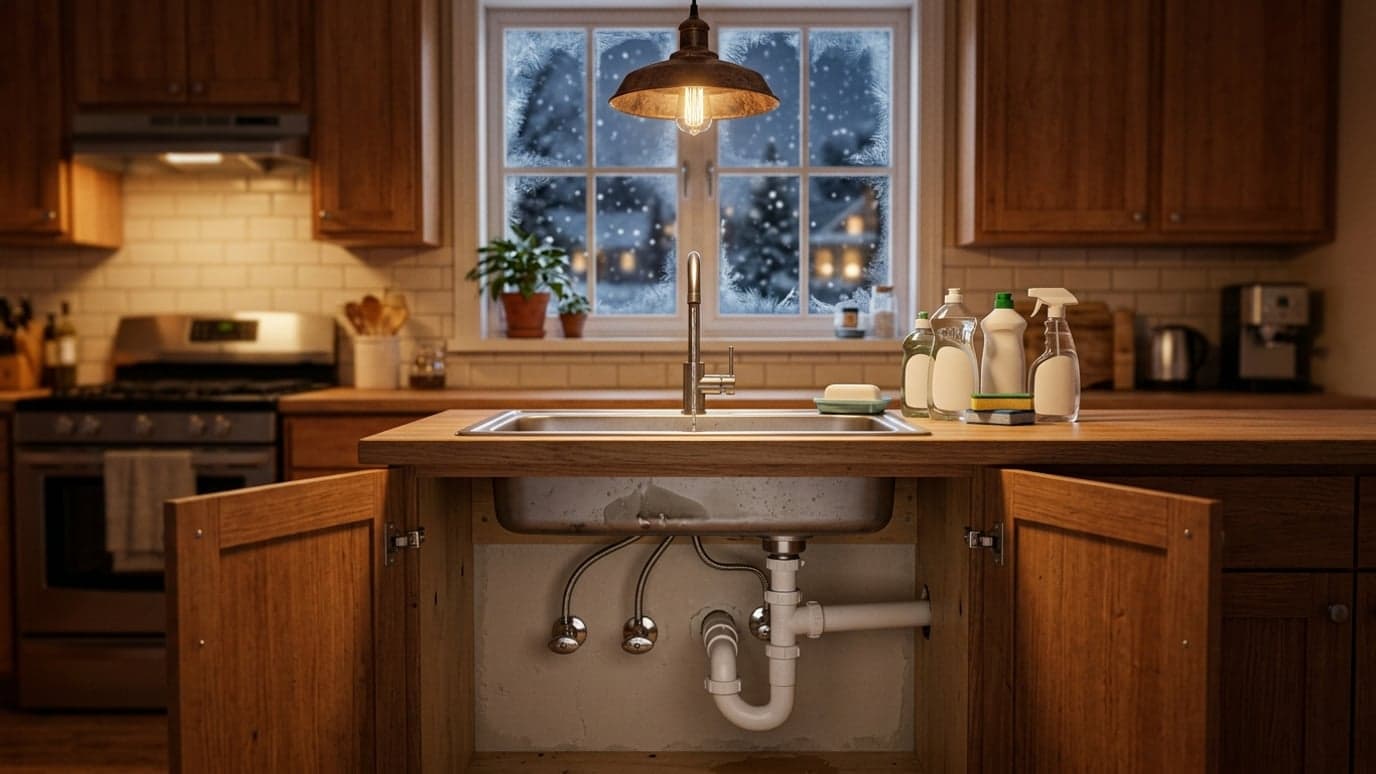
- Pipes along exterior walls: especially the kitchen or bathroom sink on an outside wall, where the only thing between the supply line and the weather is a cabinet door and a few inches of wall.
Take a flashlight and walk the house once with that list in mind. Most homes have two or three spots that matter. Write them down. You'll want that list in January when the forecast says single digits and you're trying to remember which sink is the risky one.
Know Where Your Main Shutoff Valve Is
If a pipe does burst, everything depends on how fast you can stop the water. At 250 gallons a day from a small crack, minutes count.
Your main shutoff is usually where the water line comes into the house: in the basement, a crawlspace, a utility room, or near the water heater. In warmer climates it may be outside, near the meter. Find it now, and make sure everyone in the house knows where it is, not only you.
Then try turning it. Shutoff valves that haven't moved in years can seize up, and you don't want to find that out with water on the floor. A tag or a strip of bright tape on the handle helps anyone find it in a hurry.
When to call a pro: if the valve won't turn by hand, don't force it with a wrench. An old valve can break or start leaking under pressure. A plumber can free it or replace it, and that's a far better appointment to make in October than in an emergency.
Heat Tape: Helpful, With Rules
For a pipe that freezes no matter what, such as a supply line in a crawlspace or an uninsulated garage, heat tape (also called a pipe heating cable) wraps along the pipe and warms it electrically. It works. It also causes fires when it's the wrong product or installed wrong, which is why the CPSC has issued safety guidance on it for decades.
The rules that matter:
- Buy only certified products, marked by UL, CSA, or a similar testing lab, and labeled for your pipe's material, diameter, and length.
- Don't let it overlap itself unless the manufacturer's instructions specifically allow it. Overlapped tape can overheat and start a fire.
- Use only the insulation the instructions call for over the tape, and nothing flammable.
- Look at it every fall. Cracks, charring, or exposed wire in the plastic covering mean it gets replaced, not repaired.
When to call a pro: plug-in kits for a short, reachable pipe are a reasonable do-it-yourself purchase. Anything hardwired, any self-regulating cable that needs electrical connections, and anything in a crawlspace you can't comfortably reach is a job for an electrician or plumber.
How to Prevent Frozen Pipes on the Coldest Nights
The University of Illinois research we mentioned in the fall checklist found pipes in unheated spaces start freezing around 20°F outside. When the forecast drops below that, a few habits make the difference:
- Keep the thermostat steady. The Red Cross recommends the same temperature day and night during a cold snap. The overnight setback that saves a little on heating is not worth it on the coldest nights.
- Open the cabinet doors under kitchen and bathroom sinks, especially on exterior walls, so warm room air reaches the pipes. Move cleaners and chemicals up and out of reach of kids and pets first.
- Let the cold water drip from faucets served by exposed pipes. Moving water is much harder to freeze, and a slow drip costs far less than a repair.
- Keep the garage door closed if any water lines run through the garage.
If you're traveling: leave the heat on, set no lower than 55°F, per the Red Cross. For a long winter absence, many plumbers recommend shutting off the main and draining the lines. That's a job to have a plumber walk you through the first time, since water heaters and some appliances need their own steps. One caution from State Farm: if your home has a fire sprinkler system, shutting off the water shuts it off too.
If a Pipe Freezes
The sign: you turn on a faucet in cold weather and get a trickle or nothing at all. Sometimes you can see frost on an exposed pipe.
The Red Cross's steps:
- Keep the faucet open. As the ice melts, moving water helps melt the rest.
- Apply gentle heat to the frozen section with an electric heating pad, a hair dryer, a space heater kept well away from anything flammable, or towels soaked in hot water. Keep heating until full water pressure returns, and don't leave a heater running unattended.
- Check every other faucet in the house. If one pipe froze, others may have too.
Never use a blowtorch, propane or kerosene heater, charcoal stove, or any open flame. It can damage the pipe and start a fire inside the wall.
When to call a pro: if you can't find the frozen section, can't reach it, or can't get it to thaw. A plumber's thaw visit typically runs $100 to $420. That's well worth paying to avoid a split pipe.
If a Pipe Bursts
Shut off the main water valve first. Then:
- If water is anywhere near outlets, cords, or the electrical panel, stay out of it and call an electrician or your utility before stepping in.
- Call a plumber. Most burst-pipe repairs fall between $200 and $3,000, averaging around $500, mostly labor. The water damage is the expensive part, which is why the shutoff matters so much.
- Call your insurer and take photos and video of everything before cleanup starts.
Let Mintain Remember the Pipe Checks
Every step above works only if it happens before the cold arrives, and fall is busy. That's what Mintain is for.
Add your house in Mintain and pick these from the Home templates:
- Exterior Hose Bib Winterization — annually. Set it for mid-October, before the first hard freeze.
- Supply Valve Exercise — annually. Turns the main shutoff into something you've tested, not something you hope works.
- Plumbing Leak Inspection — every 6 months. The fall check is a good time to look at the pipes you insulated.
Then add a custom task called Pipe Freeze Prep and set it to repeat every October: check foam sleeves, look over any heat tape, and re-read your list of at-risk pipes. Put the list itself in the notes field, so it's on your phone the night the forecast turns.
Free for up to 4 items. Pro is $1/month or $10/year if you track more.
Add your pipe checks to Mintain at mintain.app →
An hour this month means the coldest night of the year is something you get through, not something you clean up after. Next week: winter tires versus all-seasons, and how to tell which one you actually need.
This is part of Mintain's weekly maintenance blog. Every Monday, we publish a new guide to help you stay ahead of home, auto, yard, and equipment maintenance — so nothing catches you off guard.