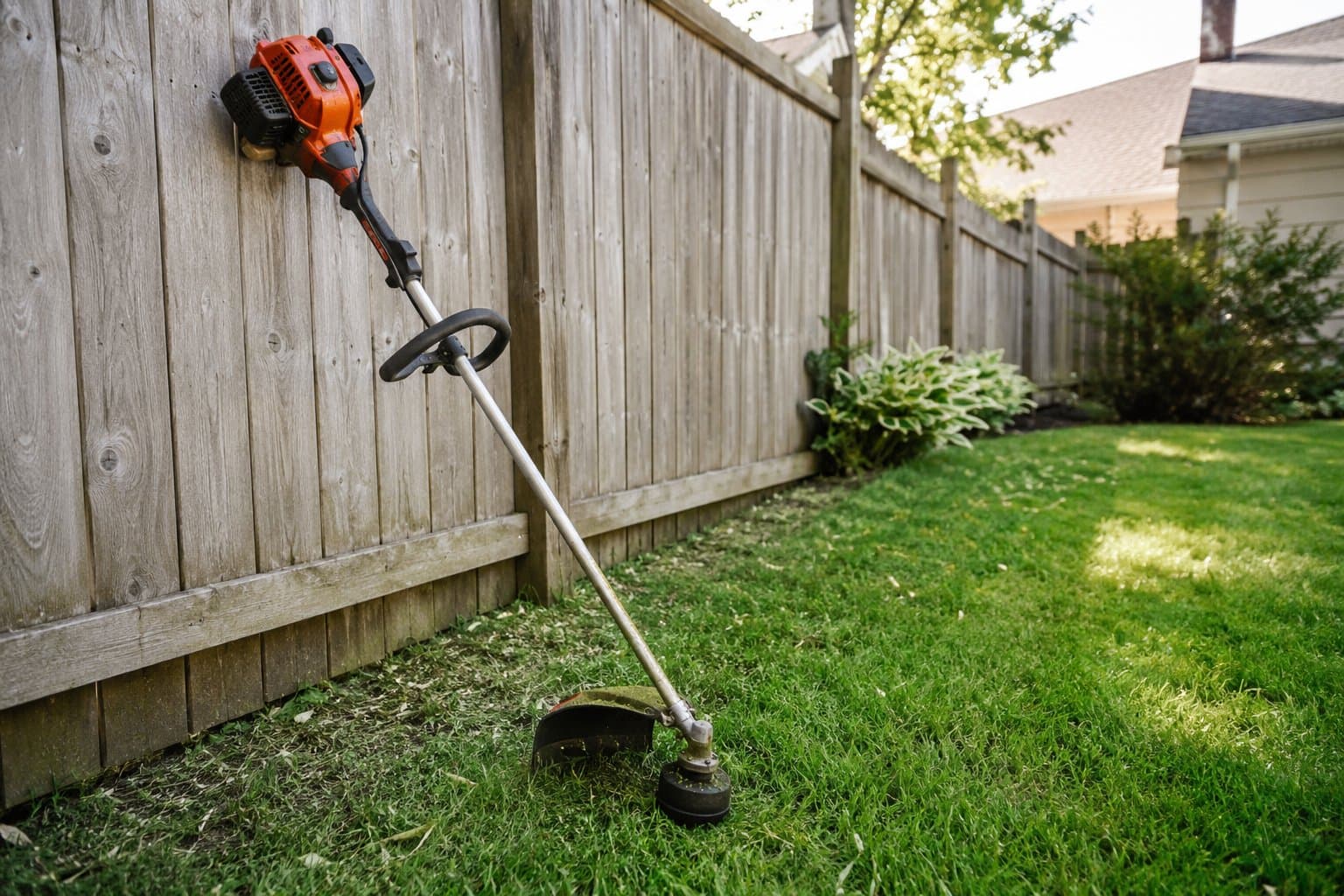
You pull the trimmer out of the shed, prime it, give the cord a few yanks — nothing. Or it sputters to life, runs for ten seconds, and dies. Now you're standing in tall grass with a tool that won't work.
A string trimmer that won't start is one of the most common spring complaints at small engine shops. The cause is almost always the same thing: fuel that sat too long, a clogged air filter, or a worn or fouled spark plug. None of it is dramatic on its own. It just adds up over a winter of sitting.
This post covers the annual string trimmer maintenance service that prevents the no-start frustration — what to do, when to do it, and when it's worth handing the trimmer to a shop instead.
Maintenance intervals in this post reflect manufacturer recommendations from STIHL, ECHO, and Husqvarna. Always consult your specific owner's manual — recommendations vary by engine.
Why String Trimmers Are Especially Fuel-Sensitive
Most string trimmers run a two-cycle engine, which uses a precise mix of gasoline and two-cycle oil — typically 50:1 — burned together as it runs. That mix is more delicate than the straight gasoline in a four-cycle mower engine.
Ethanol-blended pump gas (E10) absorbs moisture from the air. Once moisture is in the mix, it can separate the oil from the fuel, gum up the diaphragm carburetor on a small handheld engine, and leave varnish deposits in passages narrow enough to clog with very little buildup. Manufacturers including STIHL recommend running the carburetor dry before storage for exactly this reason.
The practical takeaway: any two-cycle fuel mix older than 30 days starts losing the qualities the engine needs. Anything older than six months is a likely culprit if the trimmer won't start.
The Annual String Trimmer Service Checklist
This is a once-a-year checklist — ideally before you pull the trimmer out for the season, but the spring side works too. Most of it takes under an hour with basic tools.
1. Fuel: Drain Old, Mix Fresh
If there's fuel from last season still in the tank, dump it. Don't dilute, don't top off, don't save it. Old two-cycle mix is the single most common no-start cause and the one most worth fixing first.
Mix fresh fuel. Use the ratio printed on your trimmer (most are 50:1, some are 40:1) and a quality two-cycle oil. Pre-mixed canned fuel — sold under brands like TruFuel and VP — is more expensive per ounce but contains no ethanol and stays stable for two years after opening. For a trimmer used a few hours a year, that's often the right call.
If you're mixing from pump gas, add a fuel stabilizer like Sta-Bil to the gas can. It extends shelf life significantly. Use the mixed fuel within 30 days; if you have another two-cycle tool (chainsaw, leaf blower, hedge trimmer), run the leftover mix through that instead of letting it sit. Don't pour two-cycle mix into a four-cycle mower or generator — the oil in the mix will foul the spark plug and smoke heavily.
2. Air Filter: Clean Often, Replace Annually
A clogged air filter starves the engine of air, makes it run rich, and leads to hard starts and stalling. STIHL and ECHO recommend cleaning the air filter regularly during the season — every 10 hours of use is a reasonable rule — and replacing it annually.
Cleaning a foam filter: Remove the cover, pull the filter out, wash it in warm soapy water, squeeze (don't wring) it dry, and re-oil lightly with two-cycle oil before reinstalling. A pleated paper filter gets tapped out gently or replaced.
A new air filter for most trimmers runs $5–$15.
3. Spark Plug: Inspect Annually, Replace at 100 Hours
The spark plug fires the fuel-air mix in the cylinder. STIHL's instruction manuals specify replacing the spark plug after approximately 100 hours of use. ECHO's guidance is to inspect the plug and replace it only when worn or damaged. Neither manufacturer requires annual replacement.
Most homeowners run a string trimmer 5–15 hours a year, which means a plug typically has many seasons left in it before it needs to be swapped. Pull it once a year to inspect:
- A tan or light-gray electrode is normal.
- A black, sooty plug points to a rich mixture or clogged air filter.
- A wet, fouled plug after attempted starts often means flooding or stale fuel — clean and dry it before assuming the plug itself is bad.
- A plug with rounded electrodes or visible erosion is at the end of its life.
If the plug looks good, regap it to your manual's spec, reinstall, and move on. A new plug for a string trimmer costs $3–$8 when it is time. Use the exact plug specified in your owner's manual — gap and heat range matter on small engines.
If a new or known-good spark plug doesn't change a no-start, the next suspect is fuel delivery, not ignition.
4. Fuel Filter and Lines
There's a small fuel filter — sometimes called a pickup — inside the fuel tank, attached to the end of the fuel line. It clogs over time, especially with ethanol fuel. STIHL recommends replacing the fuel pickup every 12 months.
While you have the cap off, look at the fuel line itself. If it's stiff, cracked, or has any visible swelling, replace it. Brittle lines crack and pull air, which causes the same hard-start symptoms as a clogged filter.
A new filter and line kit is usually under $10. Pulling the old pickup out with a bent piece of wire is the slightly fiddly part — the rest is straightforward.
5. Trimmer Line and Head
The cutting line wears down, breaks, and becomes the wrong diameter as it's used. Annual replacement of the spool of line is a normal part of seasonal service. While the head is off:
- Check for cracks in the head body, especially around the eyelets where the line exits.
- Look for wear or damage to the eyelets themselves; worn eyelets shred the line faster.
- Spin the head by hand to feel for grinding or roughness in the bearing.
Most trimmer heads are user-replaceable and run $15–$40. Use the line diameter your trimmer is rated for — going thicker than spec puts extra load on the engine and clutch.
6. Hardware Check
Vibration loosens fasteners. Once a year, run through the trimmer with a basic toolkit:
- Tighten the screws on the shaft housing and gear box.
- Check the handle and harness mounting bolts.
- Inspect the debris shield for cracks and confirm it's solid.
- On a curved-shaft trimmer, listen for any grinding from the gear case during a brief test run; a worn gear case is a service-shop job.
This takes about ten minutes and prevents the small things that turn into bigger ones halfway through cutting.
When to Take It to a Shop
Some problems are worth the labor charge. Bring the trimmer in if:
- You've replaced fuel, the air filter, and the spark plug, and it still won't start or run.
- It runs but bogs down badly under load — often a partially clogged carburetor.
- The clutch or gear case is making noise or smells hot.
- The engine is leaking fuel or oil.
Small engine shops typically charge $55–$135 per hour, with most string trimmer jobs falling into a single labor hour. A carburetor cleaning or rebuild usually runs $60–$120 in labor plus parts, and many shops have a minimum bench charge of $50 just to look at the unit.
That math gets ugly fast on a budget trimmer. If you paid $100–$150 for the trimmer at a big-box store, paying $80–$150 to fix it usually doesn't make sense — a new comparable unit is right there on the shelf. Repair tends to be worth it on commercial-grade STIHL, ECHO, and Husqvarna trimmers in the $300+ range, where parts are available, the engine is built to last, and a tune-up is a fraction of replacement cost. On a cheap unit that's already a few years old, recycling it and buying new is often the honest answer.
Track It in Mintain
This is one job, done once a year — not five things to keep track of. The cleanest setup in Mintain is a single annual reminder tied to storage season: add the Fuel Stabilizer / Tank Drain template, set it for the fall when you're putting the trimmer away, and use that one reminder as the trigger to run the full checklist above. Drain the fuel, swap the air filter and line, inspect the plug, look at the fuel pickup, run the carburetor dry. Done in an hour, done for the year.
If you want service history on the individual items — handy for a higher-end trimmer you plan to keep for a decade — Mintain's String Trimmer category has separate templates for each. Most homeowners don't need that level of granularity for a handheld tool.
Start tracking your equipment maintenance for free at mintain.app →
If your spring catch-up still includes the lawn mower, Spring Lawn Mower Startup: Ready to Go, or Time to Catch Up? walks through the same kind of annual service for push and self-propelled mowers.
This is part of Mintain's weekly maintenance blog. Every Monday, we publish a new guide to help you stay ahead of home, auto, yard, and equipment maintenance — so nothing catches you off guard.