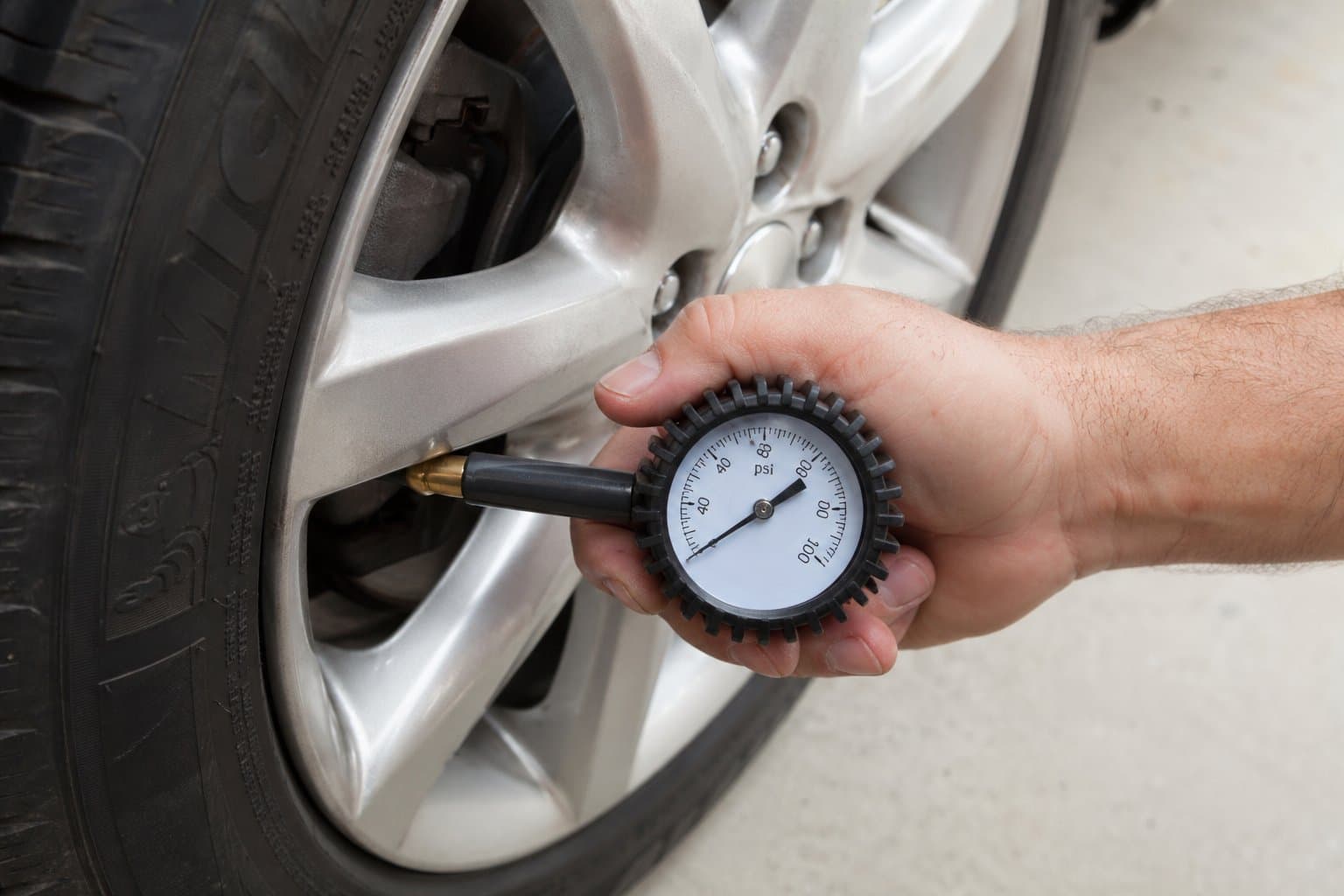
Your tires lost air over the winter. They've been gaining some back as temperatures rise. The number on your door jamb hasn't changed — but the number in your tires has, and most cars are rolling on tires that aren't where they should be.
Tire pressure isn't a topic most drivers think about until a warning light comes on. By then, the tires have usually been off for weeks. Underinflated tires use more fuel, wear unevenly, take longer to stop, and at extreme levels, fail outright. None of that shows up dramatically on its own — it compounds quietly over thousands of miles.
This post covers why a regular tire pressure check matters, how seasonal temperature changes shift things, and the right way to handle it on your own.
Statistics in this post come from the National Highway Traffic Safety Administration (NHTSA) and the U.S. Department of Energy.
What Underinflation Actually Costs You
Three things go wrong when tires run below the recommended pressure:
Safety. Vehicles with tires underinflated by more than 25% are three times more likely to be involved in a tire-related crash, according to NHTSA. Low pressure causes longer stopping distances, sluggish handling, more flex in the sidewall, and heat buildup that can lead to a blowout at highway speeds.
Fuel economy. The U.S. Department of Energy estimates fuel economy drops about 0.2% for every 1 PSI below the average recommended pressure across all four tires. Keeping tires properly inflated improves fuel economy by 0.6% on average — and up to 3% in cars that were running noticeably low.
Tire life. Underinflated tires wear unevenly — heavier on the shoulders than the center — and run hotter. Both shorten the tire's usable life. A set of tires that should have gone 50,000 miles can give up several thousand miles to chronic underinflation.
NHTSA estimates that around 28% of light vehicles on U.S. roads are running with at least one underinflated tire at any given time. It's far more common than people realize.
Why Spring Is the Wrong Time to Trust a Fall Reading
Tire pressure tracks the temperature. The general rule: tires lose roughly 1 PSI for every 10°F drop in outside air, and gain it back as it warms up. That's not a leak — it's just physics. Cold air takes up less space.
If you set your tires to 35 PSI in October and the average temperature dropped 40°F over the winter, your tires spent the cold months running closer to 31 PSI. Now that the weather is rebounding, pressures are climbing back up — but rarely evenly. One tire faces more sun than another. One has a slow valve leak. One has a slightly different rim seal.
The result: even cars that started winter properly inflated almost never finish winter that way. A spring check resets the baseline.
The TPMS Light Isn't Doing What You Think It's Doing
Every vehicle sold in the U.S. since 2008 has a Tire Pressure Monitoring System. Most drivers treat the dashboard light as a low-pressure warning. It's actually a last-line alarm.
Federal regulations (NHTSA FMVSS 138) require the TPMS to trigger only when a tire drops to 25% below the manufacturer's recommended pressure. On a car with a 35 PSI placard, that means the light comes on at about 26 PSI — well into the territory where fuel economy is suffering, the tread is wearing unevenly, and handling has degraded.
If you're waiting for the light, you've already been driving on a low tire long enough to do real harm. The TPMS catches dangerous, not low.
How to Check Tire Pressure the Right Way
The check itself takes about five minutes once a month and costs nothing if you own a $10 gauge.
Find your target pressure. Open the driver's-side door and look at the sticker on the door jamb. That number is the cold inflation pressure for your vehicle — the one to use. Ignore the number molded into the sidewall of the tire. That's the maximum the tire can hold, not what your car needs.
Check tires cold. "Cold" means the car has been parked for at least three hours, or driven less than a mile. A tire that's been on the highway for an hour will read several PSI higher than it actually is when cold. Early morning, before the day's first drive, is ideal.
Use a real gauge. Gas station air pumps with built-in gauges are notoriously inaccurate. A pencil-style or digital handheld gauge from any auto parts store costs $5–$20 and lasts years. Keep it in the glove box.
Don't forget the spare. If your car has a full-size spare, it loses pressure too. A spare that won't hold air is the same as no spare at all.
Adjust each tire to the placard pressure with a portable inflator (around $30–$60) or at any gas station. Re-check a few minutes later — sometimes the first reading is off because the valve hadn't fully seated.
When It's a Slow Leak, Not Just Temperature
Tires lose a small amount of air through the rubber itself — usually 1–2 PSI per month per tire. That's normal. What isn't normal:
- One tire dropping 3–5 PSI in a week or two
- A tire that needs topping up every time you check
- A tire that goes flat overnight after sitting
These point to a slow leak — usually a nail in the tread, a leaking valve stem, or a wheel bead seal failure. A reputable tire shop can plug or patch a tread puncture for $20–$40 and have you back on the road in 30 minutes.
When to call a pro instead of patching: Sidewall damage isn't repairable. Bulges, cracks, or cuts in the sidewall mean the tire needs to be replaced. The same applies to any puncture larger than ¼ inch or one too close to the sidewall. Most shops will refuse to patch a tire they don't think is safe to repair — that's a feature, not a problem.
Track It in Mintain
Most drivers don't ignore tire pressure on purpose — they forget. A monthly push notification from Mintain removes the forgetting. Add the Tire Pressure Check, Tire Rotation, and Tire Tread Depth Check templates to your vehicle and the timing takes care of itself.
Start tracking your car maintenance for free at mintain.app →
If you haven't yet worked through the rest of your spring car checks, Is Your Car Ready for Spring? A Simple Checkup Guide covers wipers, battery, coolant, and cabin air filter in the same plain-language format.
Common Questions
My TPMS light just came on. Can I keep driving? Drive only as far as needed to add air safely. The TPMS triggers at 25% below recommended, which is well into the unsafe range for highway speeds. If the air won't hold for more than a few minutes after refilling, you have a leak that needs a shop, not just another top-up.
Should I overinflate to save fuel? No. Inflating above the placard pressure causes uneven wear on the center of the tread, a harsher ride, and reduced grip. The trade-offs aren't worth it.
This is part of Mintain's weekly maintenance blog. Every Monday, we publish a new guide to help you stay ahead of home, auto, yard, and equipment maintenance — so nothing catches you off guard.