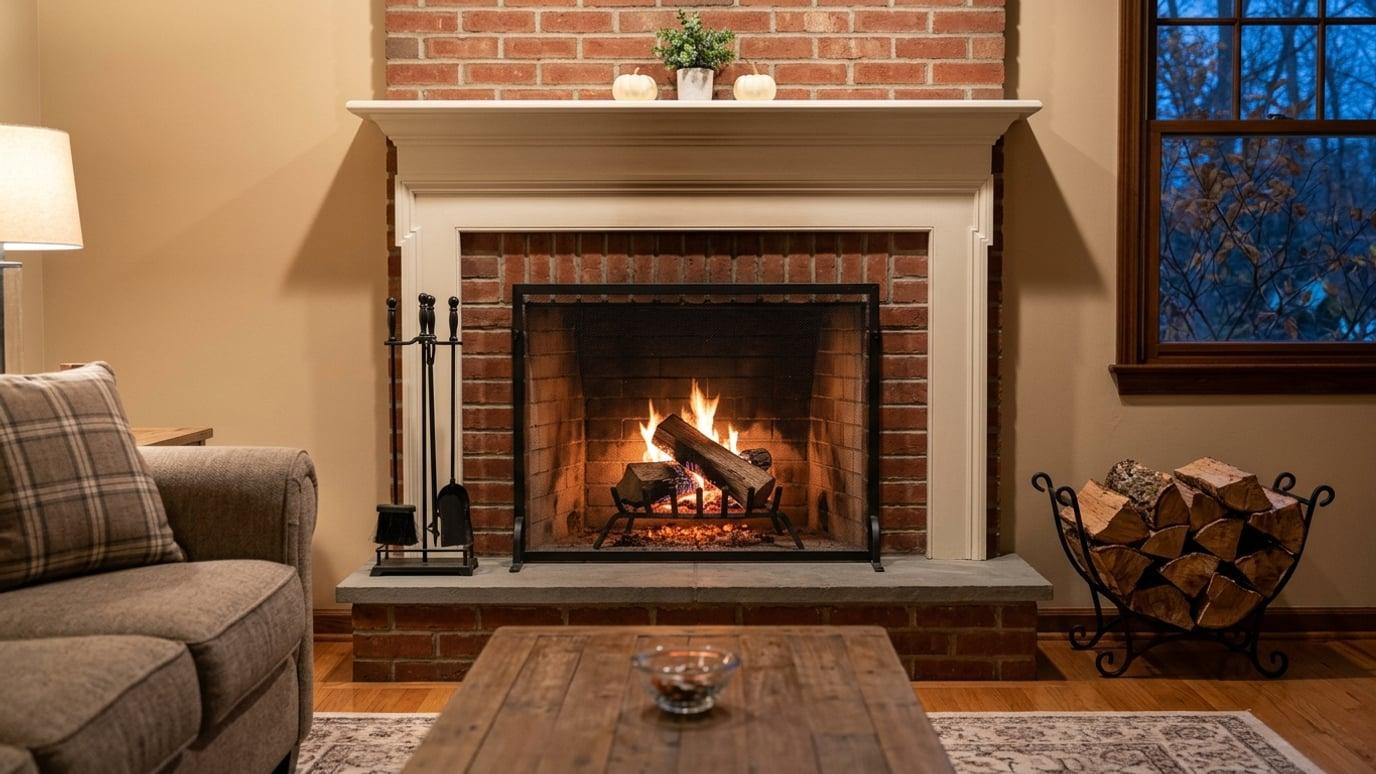
Thanksgiving is often the first night of the year someone says, "Let's light a fire." The logs are stacked, everyone's full, and nobody has thought about the chimney since last spring.
So how often should you get a chimney inspection? Once a year, say both the National Fire Protection Association (NFPA) and the Chimney Safety Institute of America (CSIA), even if you only light a handful of fires. That goes for wood stoves and gas fireplaces, too. If yours hasn't been checked since last winter, the safest plan is to book the visit now and hold off on the fire until it's done.
Here's what each inspection covers and costs, how to burn safely between visits, and when to call someone.
Guidance below reflects the NFPA's 2026 fire safety messages, the U.S. Fire Administration, the CSIA, and the EPA's Burn Wise program, along with published costs from This Old House, Bob Vila, and State Farm. Your fireplace or stove manual is the final word for your home.
What Builds Up Inside a Chimney
As wood smoke rises through a cooler chimney, some of it condenses on the inside walls. That residue is creosote, and it burns. NFPA reports have repeatedly found that failure to clean, mostly creosote in chimneys, is the leading factor in home heating fires.
Creosote can be flaky, sticky and tar-like, or shiny and hard. The shiny kind, called glaze, is the toughest to remove. The CSIA says three things make more of it: wood that isn't fully dry, a fire starved for air, and a chimney that runs cooler than normal.
For a masonry fireplace, the CSIA says to sweep at 1/8 inch of buildup, or sooner if there's any glaze. Factory-built (prefab metal) fireplaces should be swept at any noticeable buildup, because the deposits can corrode the parts. You can't see any of this from the hearth, which is why the yearly check matters.
Chimney Inspection: How Often, and Which Kind
NFPA 211, the standard the chimney industry follows, says chimneys, fireplaces, and vents should be checked at least once a year for soundness, buildup, and safe clearances. Sweeping happens when the inspection says it's needed, which for a wood fireplace you use regularly is often every year too.
There are three levels of inspection:
- Level 1 is the standard yearly check of everything the sweep can reach without tools: the firebox, damper, visible flue, and the outside of the chimney. It's the right one when nothing about your setup has changed.
- Level 2 adds a camera run up the flue, plus a look at the chimney from the attic, basement, or crawl space. The CSIA recommends one when a home is sold, after a chimney fire or storm damage, and before you add a new stove or insert.
- Level 3 is for when a Level 1 or 2 points to a hidden problem. It can mean opening part of a wall or the chimney, so it's rare.
The CSIA says a complete sweeping covers the flue and the smoke chamber, the funnel-shaped space above the damper. If only the firebox brick got cleaned, you didn't get the full service.
Gas fireplaces need it, too. They don't make creosote, but the CSIA says their chimneys can still be blocked by bird nests or debris. The NFPA's 2026 guidance calls for gas appliances to be inspected every year.
What an Inspection and Sweep Cost
These figures come from Angi and HomeAdvisor contractor data, as reported by This Old House, Bob Vila, and State Farm:
- Cleaning plus a Level 1 inspection: about $129 to $380. A Level 1 alone usually runs under $200.
- Level 2 with a camera: around $200 for one flue, up to $1,000 for several.
- Level 3: can reach $5,000.
- Gas fireplace sweep: about $85 to $250.
- Heavy creosote or glaze removal: up to about $800.
- Chimney cap, the metal cover with mesh sides that keeps out rain and animals: around $300 on average.
Get the price in writing before work starts.
Fireplace Safety Between Inspections
The yearly visit takes care of the chimney. What goes into the fireplace is up to you.
- Burn only dry, seasoned wood. The NFPA says it leaves less buildup in the chimney. The EPA's Burn Wise guidance says wood burns best below 20 percent moisture and should dry for at least six months. Seasoned wood is darker and lighter, and it sounds hollow when two pieces are knocked together.
- Keep everything else out. No trash, cardboard, or wrapping paper. The EPA specifically lists cardboard and the colored ink on boxes and wrappers, worth remembering in December.
- Start it the right way. The NFPA says to use only newspaper, kindling, or fire starters, never lighter fluid, kerosene, or gasoline.
- Keep the screen in place, metal or heat-tempered glass, and keep kids and pets 3 feet back. The NFPA notes glass doors and screens can stay dangerously hot for hours after the fire is out. The glass front of a gas fireplace can reach 1,300°F, so it needs a screen barrier, too.
- Leave the damper open until the fire is completely out, so smoke and gases from the embers go up the chimney. Never go to bed or leave the house with a fire burning.
- Treat ashes as hot. Let them cool, put them in a metal can with a tight lid, soak them with water, and keep the can at least 10 feet from the house. Never empty ashes into a trash can.
Any home with a fireplace also needs working carbon monoxide alarms. Our smoke and CO alarm guide covers where they go.
Signs of Trouble, and When to Call a Pro
If you think the chimney is on fire, get everyone out and call 911 from outside. The CSIA lists loud cracking and popping, a lot of dense smoke, and an intense, hot smell as the signs. State Farm adds that you shouldn't assume it will burn itself out. Chimney fires can reach around 2,000°F, hot enough to crack the flue lining.
Not every chimney fire is loud, though. The CSIA says most go undetected because they burn slowly. Afterward, you might spot creosote flakes on the roof or ground, a discolored chimney cap, or cracks in the outside brick. If you do, the CSIA advises not using the fireplace until a pro has swept and checked it.
Call a chimney pro (not 911) if:
- Smoke drifts back into the room while the fire is going.
- The fireplace smells strongly of smoke or tar when it isn't in use.
- You hear birds or animals in the chimney, or there's no cap on top.
- You see crumbling brick, missing mortar, or a cracked crown, the concrete slab on top of the chimney. Our roof inspection guide covers what to look for from the driveway.
When you hire, look for a CSIA-certified sweep, which you can search for on the CSIA's website. Ask for photos or video of anything they say needs fixing. If a low-priced cleaning turns into a quote for thousands in repairs, get a second opinion first.
Track Your Chimney Inspection in Mintain
Yearly tasks are the ones that slip, because a year is long enough to forget when you last did them. Mintain keeps the date for you.
Add your house in Mintain and pick these from the Home templates:
- Chimney Inspection & Cleaning: annually. Set it for late summer or early fall, so next year's appointment lands before the first cold night.
- Smoke Detector Test and Carbon Monoxide Detector Test: monthly.
- Carbon Monoxide Detector Replacement: every 6 years.
- Fire Extinguisher Inspection: annually.
- Roof Inspection: annually, a good time to look at the chimney from the yard.
Free for up to 4 items. Pro is $1/month or $10/year if you track more.
Put your chimney on a schedule at mintain.app →
With a clean, checked chimney, the only question on Thanksgiving night is who gets to add the next log. Next week: keeping your car battery going through the cold.
This is part of Mintain's weekly maintenance blog. Every Monday, we publish a new guide to help you stay ahead of home, auto, yard, and equipment maintenance — so nothing catches you off guard.