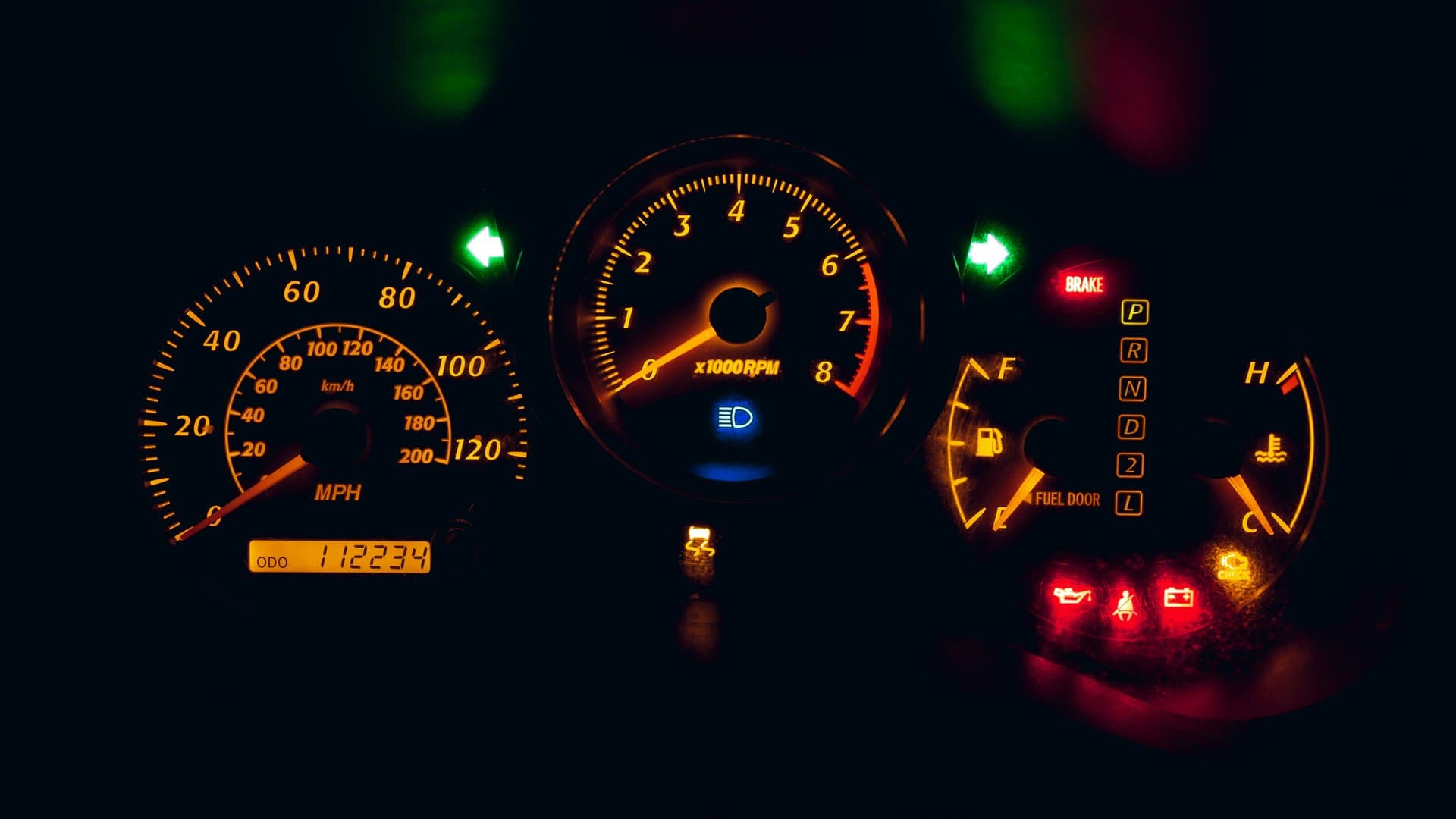
A dashboard warning light comes on. You don't recognize the symbol. The car still drives. You make a note to "look it up later" and then you don't, and the light is still there a week later, quietly nagging you every time you start the car.
Modern cars have somewhere between 30 and 60 different dashboard warning lights, and most of them look like cryptic little hieroglyphs. Some mean "pull over now." Others mean "schedule something in the next few weeks." The trick is knowing which is which without panicking — or, worse, ignoring the one you shouldn't.
This guide covers the dashboard warning lights you're most likely to see, what each one actually means, and what to do about it.
Information in this guide reflects published guidance from AAA, Consumer Reports, the National Highway Traffic Safety Administration (NHTSA), and major manufacturer owner's manuals. Specific behavior may vary by vehicle — your owner's manual is the final word.
Dashboard Warning Lights: Color Tells You How Urgent
Before you decode the symbol, look at the color. It's the fastest read on how soon you need to act.
- Red — Stop or take action immediately. Continuing to drive risks serious damage to the car, the people in it, or both. Pull over when it's safe and figure out what's happening.
- Yellow or amber — Something needs attention soon. Usually safe to keep driving in the short term, but don't put it off for weeks.
- Green or blue — Informational. A system is on or active (headlights, cruise control, turn signal). No action needed.
If a red light comes on while you're driving and you don't recognize the symbol, the safest move is to pull over, turn the car off, and look it up before you go any farther.
Red Lights — Pull Over Now
Oil Pressure Warning
What it looks like: A red oil can with a drip, sometimes labeled OIL.
What it means: Your engine isn't getting the oil pressure it needs. This is the most expensive warning light on the dashboard. An engine running without oil pressure can self-destruct in minutes.
What to do: Pull over as soon as it's safe. Turn the engine off. Check the oil level — if it's low, adding oil may get you to a shop. If the level is normal, do not drive the car. A tow is cheaper than an engine.
Cost range: A simple oil top-up is free to a few dollars. A failed oil pump or low-pressure repair runs $400–$1,200. A seized engine from continued driving runs $4,000–$10,000+.
Temperature Warning
What it looks like: A red thermometer floating in waves, or a red TEMP indicator.
What it means: Your engine is overheating. Causes include low coolant, a failed thermostat, a leaking hose, or a bad water pump.
What to do: Pull over, turn the engine off, and let it cool for at least 30 minutes before opening the hood. Never remove a hot radiator cap — pressurized coolant will spray and cause serious burns. Once cool, check the coolant reservoir level. If it's empty and you have water on hand, you may be able to top up enough to get to a shop. Continued driving while overheating can warp the cylinder head — a four-figure repair.
Cost range: Coolant top-up: free. Thermostat or hose: $150–$400. Water pump: $400–$900. Head gasket from overheating damage: $1,500–$3,000+.
Battery / Charging System
What it looks like: A red rectangular battery symbol with + and − terminals.
What it means: The charging system isn't keeping up. Almost always an alternator, drive belt, or battery cable issue — not the battery itself. The car is running on stored battery power, which usually lasts 20–45 minutes once the light comes on.
What to do: Head straight to a shop or home. Turn off everything not strictly needed — AC, radio, heated seats, accessory chargers. If the car dies on the road, it likely won't restart without a jump.
Cost range: Alternator: $400–$900 including labor. Drive belt: $100–$200. Cable repair: $50–$200.
Brake System Warning
What it looks like: A red exclamation mark inside a circle inside parentheses, sometimes labeled BRAKE.
What it means: Three possibilities. The parking brake is engaged (most common — false alarm). Or the brake fluid is low. Or there's a serious hydraulic problem in the brake system.
What to do: Check the parking brake first. If it's off and the light stays on, find a safe place to stop. Test the brake pedal — if it feels normal, drive carefully to a shop. If the pedal feels soft, spongy, or sinks to the floor, do not drive. Call for a tow.
Cost range: Brake fluid top-up: under $20 in parts. Master cylinder replacement: $400–$900. Full brake system service: $300–$700 per axle.
Airbag / SRS Warning
What it looks like: A red icon of a seated person with a circle (the airbag) in front of them, or the letters SRS.
What it means: A fault in the Supplemental Restraint System. The airbags may not deploy in a crash. Or worse, they may deploy when they shouldn't.
What to do: Safe to drive in normal traffic, but get it diagnosed soon. Don't ignore it — an undeployed airbag in a crash is the kind of thing you find out about exactly once.
Cost range: Diagnostic: $75–$150. Sensor or clock spring repair: $200–$700. Airbag module replacement: $400–$1,000+.
Yellow / Amber Lights — Soon, But Not Right Now
Check Engine Light
What it looks like: An amber engine block silhouette, sometimes with the word CHECK.
What it means: The car's computer detected something out of spec somewhere in the emissions or engine management system. This is the broadest, vaguest light on the dashboard — anywhere from "your gas cap is loose" to "you have a serious misfire."
What to do:
- Solid amber light: Get it scanned within the next week or two. Many auto parts stores — AutoZone, O'Reilly, Advance — will read the code for free. The code points to the system at fault but not always the exact part. A repair shop confirms and fixes.
- Flashing check engine light: Different situation. A flashing CEL means an active misfire that can damage the catalytic converter quickly. Drive gently, avoid heavy acceleration, and get to a shop within a day or two.
A loose or failing gas cap is responsible for roughly 10–20% of check engine lights, according to AAA. Tightening it (or replacing a worn one for under $20) will clear the code after a few drive cycles.
Cost range: Free code scan at most parts stores. Diagnostic at a shop: $75–$150. Repair varies wildly — gas cap is $15, catalytic converter replacement is $1,200–$3,000.
Tire Pressure (TPMS)
What it looks like: An amber horseshoe with an exclamation mark — meant to look like a tire cross-section.
What it means: At least one tire is at 25% or more below the recommended pressure. Federal regulation requires this threshold, which is well into the unsafe range.
What to do: Check the pressure on all four tires (don't forget the spare on some vehicles) and bring them up to the placard pressure inside the driver's door jamb. If the light comes back within a few days, you have a slow leak that needs a tire shop. Plug or patch repairs run $20–$40.
For the full picture, we covered tire pressure in depth two posts ago — including why the light triggers so late and what to do about it.
ABS (Anti-Lock Braking System)
What it looks like: Amber letters ABS, sometimes inside a circle and parentheses.
What it means: The anti-lock system is disabled. Your brakes still work normally — what you lose is the wheel-by-wheel modulation that prevents skidding during hard braking on wet or slick roads.
What to do: Safe to drive, but get it diagnosed within a couple of weeks. The fix is usually a wheel speed sensor — a small part that takes a sensor or a wheel hub.
Cost range: Diagnostic: $75–$150. Wheel speed sensor: $150–$400. ABS pump or module: $600–$1,200.
Traction / Stability Control
What it looks like: A car with two squiggly lines underneath, or the letters TCS or ESC.
What it means: Two situations. Blinking: the system is actively engaged because you're losing grip right now — slow down. Steady on: the system is disabled, either because you turned it off or because of a fault.
What to do: If you didn't turn it off, get it diagnosed. A traction control fault is often tied to the same wheel speed sensors as the ABS light, and the two frequently come on together.
Low Fuel
The one symbol everyone recognizes. Most cars give you 30–50 miles of range after the light comes on, but the actual buffer varies — your owner's manual lists the specific reserve capacity. Don't make a habit of running it down to fumes; the fuel pump uses the gas itself for cooling.
What to Do When a Light Comes On
A simple decision tree handles 90% of cases:
- Note the color. Red is urgent. Yellow can wait days or weeks, not months.
- Check the owner's manual. Every modern car has a warning light glossary in the manual or the touchscreen menu. Manufacturer-specific icons (like the AdBlue light on diesels, or the EV battery icon on hybrids) aren't always covered in generic guides.
- For amber lights, get a free code scan. Most large auto parts chains read OBD-II codes at no charge for any car built after 1996. They'll print the code and a description — bring it to your mechanic.
- For red lights, pull over and assess. If you don't know what the symbol means and the car still drives, drive only as far as needed to get to a safe place to look it up.
When to Call a Pro
Most dashboard lights are diagnostic puzzles, and unless you have a scan tool and some mechanical comfort, the answer is "the shop." Specifically:
- Any red light you can't immediately explain. Don't drive farther than you have to.
- Flashing check engine light. Active misfire. Get it in within a day or two.
- ABS, airbag, or stability control lights. These tie into safety systems that need proper diagnostic tools, not a guess.
- Multiple warning lights at once. Often points to a single underlying issue (alternator, ground strap, sensor) — but figuring out which takes a tech.
Most independent shops charge $75–$150 for a diagnostic. Dealers charge $120–$220. The diagnostic fee is often waived or applied to the repair if you have the work done there.
Track It in Mintain
Warning lights are how your car asks for help after the fact. Maintenance is how you keep the lights from coming on in the first place. Add the Oil & Filter Change, Under-Hood Fluid Check, Battery Load Test, and Tire Pressure Check templates to your vehicle in Mintain. Each one runs on its own interval, and Mintain stores the history — so when a light does come on, you have a record of what's been done and when.
Use the notes field on each template to store your oil type, battery date code, tire size, and any codes a shop has read for you. The next time you're at the parts store or talking to a mechanic, the information is already in your pocket.
Start tracking your car maintenance for free at mintain.app →
If you haven't worked through the basics this spring, Is Your Car Ready for Spring? A Simple Checkup Guide covers the routine items that prevent most of the lights above from ever showing up.
This is part of Mintain's weekly maintenance blog. Every Monday, we publish a new guide to help you stay ahead of home, auto, yard, and equipment maintenance — so nothing catches you off guard.