The AC has been running since breakfast, the house still feels sticky by mid-afternoon, and you already know what the next electric bill is going to look like. Before you drop the thermostat another two degrees, there's a handful of small things that take the load off your air conditioner — so it cools the house faster and runs less.
None of this is about suffering through the heat. It's about helping your AC do its job instead of fighting the same battle all day. A few of these are five-minute habits; a couple are worth setting up once and forgetting. Together they're the simplest way to reduce your cooling costs this summer without making the house any less comfortable.
The intervals and figures below come from the U.S. Department of Energy (energy.gov) and ENERGY STAR. Your home, climate, and equipment will shift the exact numbers, but the direction holds everywhere.
Block the Sun Before It Becomes Heat
The single biggest thing heating your house in summer is sunlight coming through the windows. About 76% of the sunlight that hits a standard double-pane window comes inside and turns into heat. Your AC then has to remove all of it.
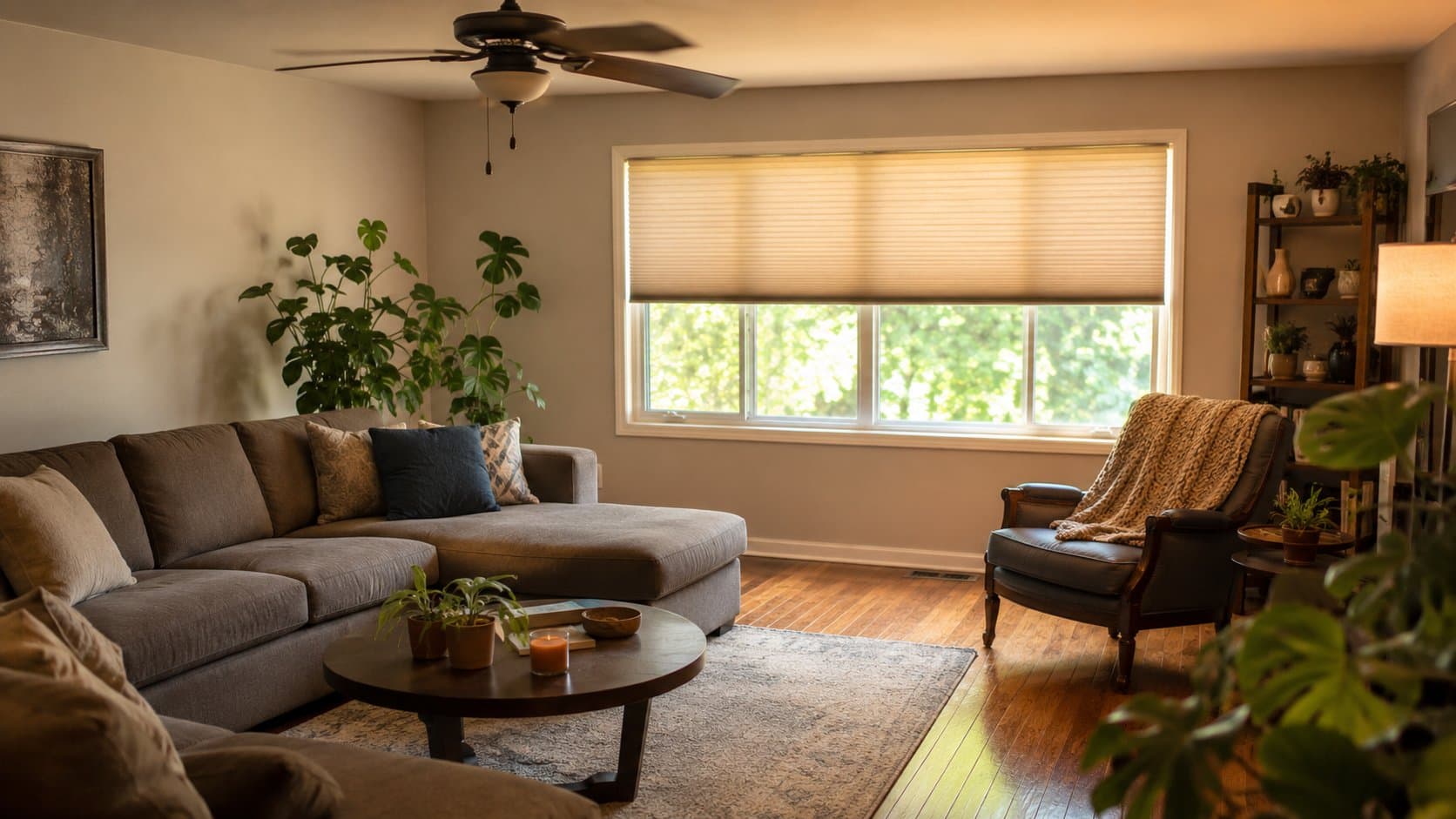
The fix is free: close the blinds or curtains on any window the sun is hitting, especially the south- and west-facing ones during the afternoon. How much that helps depends on what you've got:
- Medium-colored draperies with a white plastic backing can cut heat coming through a sunny window by about 33%.
- Cellular (honeycomb) shades, fitted tightly to the window, can reduce solar heat gain by up to 60%.
- Light or white coverings reflect more heat back outside than dark ones, so color matters more than you'd think.
For a window that bakes every afternoon, exterior awnings go a step further — blocking the sun before it ever reaches the glass and cutting heat gain up to 65% on south-facing windows and 77% on west-facing ones. That's a purchase rather than a habit, but it's the most effective option of all.
Set Your Thermostat to Work With the Weather
The rule for summer is simple: the smaller the gap between the temperature inside and the temperature outside, the lower your cooling bill. Every degree cooler you ask for costs more, because the AC runs longer to hold it.
ENERGY STAR's recommended summer schedule is 78°F when you're home and awake, 85°F when you're out for the day, and 82°F while you sleep. Those numbers aren't a comfort verdict — 78 might feel too warm or too cool for your household — but the pattern is what saves money: let the house drift warmer when no one's there to feel it.
That "warmer when you're away" part is where the real savings live. The Department of Energy estimates you can save as much as 10% a year on heating and cooling by setting the thermostat back 7–10°F for eight hours a day. A programmable or smart thermostat does this automatically, so you're not relying on remembering to nudge it on your way out the door.
Let Ceiling Fans Do the Easy Work
A ceiling fan doesn't actually lower the temperature of a room. It moves air across your skin, which creates a wind-chill effect that makes you feel a few degrees cooler than the thermometer says. That small distinction changes how you use it.
First, check that the fan is spinning counterclockwise (looking up at it). That direction pushes air down and creates the cooling breeze you want; the reverse setting is for winter. There's usually a small switch on the motor housing to flip it.
Because the breeze makes you feel cooler, you can raise the thermostat about 4°F with a fan running and not notice the difference — which is a direct cut to your bill. The catch: a fan only helps the person it's blowing on. Running one in an empty room does nothing but add a little heat from the motor and waste electricity, so turn fans off when you leave the room.
Keep the Air Moving — Starting With a Clean Filter
Everything above assumes your AC is breathing freely, and the most common reason it isn't is a clogged filter. When the filter packs with dust, the system has to strain to pull air through it. It runs longer, cools less, and works harder than it should — the opposite of what you're trying to do here.
Check it monthly during heavy cooling season and replace it on schedule — most homes need a fresh filter every one to three months, sooner with pets or allergies. We went deep on filter types and timing in How Often Should You Really Change Your HVAC Filter?, and it's the highest-value ten minutes on this whole list.
A few more ways to keep heat out of the air your AC has to handle:
- Vent heat at the source. Run the kitchen and bathroom exhaust fans when you cook or shower — they pull heat and humidity straight outside instead of letting the AC chase it.
- Cook when it's cooler. The oven and stovetop dump a surprising amount of heat into the house. Save the big-oven meals for evening, or lean on the microwave, grill, or stovetop on the hottest afternoons.
- Switch to LED bulbs if you haven't. Old incandescent bulbs throw off most of their energy as heat. LEDs run cool and use a fraction of the power.
Seal the Leaks That Let Cool Air Escape
If cooled air slips out around windows and doors, your AC is air-conditioning the outdoors. Weatherstripping around doors and caulk around window frames are inexpensive fixes — usually under $20 in materials per door or window — and they pay off in both summer cooling and winter heating. It's the same sealing work that keeps a house warm in January, just working in the other direction now.
When to Call a Pro
Most of this you can handle yourself. A few situations call for someone with the right tools:
- Your AC runs constantly and still can't keep up, even with a clean filter. That points to something mechanical — low refrigerant, a failing compressor, or a system that's undersized or aging out. An HVAC technician can diagnose it. If you skipped a spring tune-up, that's the place to start; we covered what one involves in Getting Your AC Ready Before the Heat Hits.
- You want to find every leak and weak spot at once. A professional home energy assessment uses a blower-door test and infrared camera to find air leaks, missing insulation, and leaky ductwork you can't see. It typically runs $200 to $700, though many utilities offer them free or at a steep discount, and a federal tax credit covers up to $150 of a qualified audit. The written report tells you exactly where your money is leaking.
- Your attic is under-insulated or your ducts leak. Both are major sources of summer heat gain, and both are jobs where a pro and the right materials make a real difference. The energy audit above will tell you whether either one applies to your house.
How Mintain Helps You Reduce Cooling Costs All Summer
The hard part of all this isn't the doing — it's that the most important pieces are invisible until your bill spikes. The filter looks fine until airflow drops. The tune-up gets skipped because nothing reminded you. That's the gap Mintain closes.
Set up your home in Mintain and add the templates that keep your cooling system efficient:
- HVAC Filter Replacement — every 2 months (store your filter size in the notes field so you never measure it at the store again)
- HVAC Annual Tune-Up — annually, scheduled for spring so the AC is ready before the heat
- Exterior Caulk & Weatherstripping Inspection — annually, to catch the leaks that waste cooled air
You can also add a custom seasonal reminder for the two-minute switchover most people forget: flip your ceiling fans to counterclockwise and set your summer thermostat schedule when the weather turns. Set it to repeat every spring and it's handled.
Start tracking your home maintenance for free at mintain.app →
Keeping cool isn't about choosing between comfort and the bill. Do the small things, and your AC spends less time working — which is better for the house, the wallet, and the afternoon.
This is part of Mintain's weekly maintenance blog. Every Monday, we publish a new guide to help you stay ahead of home, auto, yard, and equipment maintenance — so nothing catches you off guard.