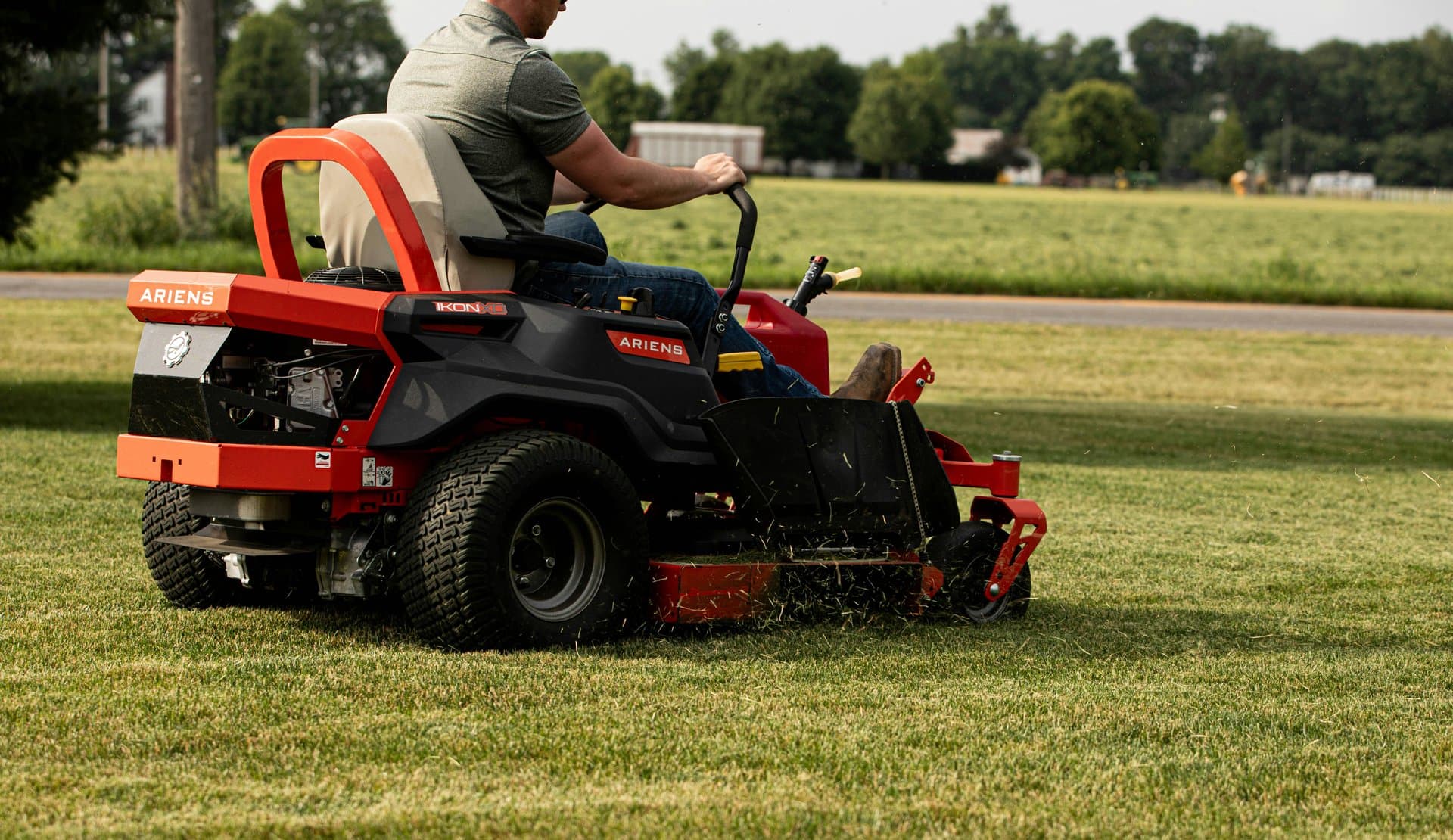
A riding mower is one of the most expensive machines in the garage that almost never gets serviced. It cuts fine, so it gets left alone — right up until the season it won't start, the cut turns ragged, or a belt lets go in the thick of mid-July.
A push mower is a simple machine. A riding mower or lawn tractor is not — it has more oil, an actual oil filter, a battery, drive and deck belts, two or three blades, and grease points a walk-behind mower doesn't have. That's more to go wrong, but it's predictable, and almost all of it comes down to one real service a year.
Done on schedule, that service keeps a $1,500–$3,500 machine cutting cleanly for well past a decade. This post covers the riding mower maintenance schedule worth following, what each item involves, and where the line is between a job you can handle and one worth handing to a dealer.
Service intervals here reflect manufacturer guidance from Briggs & Stratton, Kohler, John Deere, and Husqvarna. Always check your own owner's manual — exact figures vary by engine and model.
When to Run Your Riding Mower Maintenance Schedule
The best time is the end of the season, before the mower sits all winter — fresh oil and a clean machine beat a long winter on dirty oil and stale fuel. If fall came and went and you didn't get to it, the start of the season works too; do it before the grass takes off, not in the middle of peak cutting.
If all you want right now is a quick "is it ready to mow" check, our Spring Lawn Mower Startup guide covers that fast pass. The list below is the deeper once-a-year service.
1. Change the Engine Oil and Filter
This is the most important item on the list, and the one a riding mower needs that a basic push mower often doesn't: an oil filter. Most manufacturers recommend changing the oil and filter every 50 hours of operation or once a year, whichever comes first. A new engine also needs an early break-in change after the first few hours of use — often 5 to 8, but check your manual.
Most riding mower engines hold around 1.5 to 2 quarts, more than a push mower, and the filter is a small spin-on canister on the side of the engine. Use the oil grade your manual specifies; many modern engines now approve synthetic 5W-30, but the manual is the authority.
Done yourself, oil and a filter run about $20–$35. A shop will do it for $25–$50.
2. Service the Air Filter and Spark Plug
The air filter keeps grit out of the engine, and a riding mower throws up a lot of dust. Most have a pleated paper cartridge, sometimes with a foam pre-cleaner wrapped around it. Manufacturers recommend cleaning it during the season and replacing it annually or every 50 hours. A paper cartridge that's gray and packed with dust gets replaced, not cleaned — a new one runs $10–$25.
Pull the spark plug once a year and look at it: a tan or light-gray tip is healthy, while a black, sooty plug or one with rounded, eroded electrodes is past its prime. Manufacturers call for replacement every 100 hours or annually, and since most homeowners mow well under 100 hours a year, a good-looking plug usually has life left. Plugs cost $4–$8 each, and twin-cylinder engines have two.
3. Sharpen or Replace the Blades
A dull blade tears grass instead of slicing it, leaving frayed, browning tips that make the whole lawn look stressed a day after you cut. Riding mowers run two or three blades under the deck, so there's more to keep up with than on a push mower.
Always disconnect the spark plug wire before you go near the deck. Sharpen blades that are merely dull and nicked; replace any blade that's bent, cracked, or worn thin at the cutting edge. A bent blade throws the deck out of balance and sends damaging vibration into the spindle and engine — it's never worth saving. Re-balancing a blade after sharpening matters for the same reason.
Replacement blades run $15–$40 each. A shop will sharpen and balance a blade for about $10–$15.
4. Clean Under the Deck and Check It's Level
Caked grass under the mowing deck holds moisture against the metal, which rusts it out faster, and it chokes airflow so the cut comes out uneven. With the spark plug wire off, scrape the underside clean once the buildup dries.
While you're under there, confirm the deck is level. A deck that's tilted or has drifted out of adjustment leaves a stepped, uneven cut and scalps high spots. Leveling involves adjusting the deck hangers to your manual's measurements — straightforward on some models, fiddly on others. If your cut looks ragged and the blades are sharp, an off-level deck is the usual culprit.
5. Inspect the Belts
Riding mowers use belts in two places: a deck belt that spins the blades and a drive belt that moves the machine. They wear slowly, then fail all at once — usually mid-mow. Once a year, look them over for cracks, glazing (a shiny, hardened surface), fraying, or stretching.
Unlike oil, belts don't go on a fixed schedule — you replace them when they show wear, and catching that during your annual check beats having one snap mid-mow. Belts run $35–$150 installed. Routing a new one around the pulleys is doable but genuinely awkward on many decks, so it's a reasonable job to hand off.
6. The Annual Once-Over: Battery, Tires, and Grease
Three quick checks round out the service:
- Battery. A riding mower has a 12V battery that lasts about 3–5 years — a healthy one reads 12.6V or higher at rest. Clean corrosion off the terminals, and over winter keep it on a trickle charger so it doesn't sulfate and die. Replacements run $30–$80.
- Tire pressure. Mower tires run far lower than car tires — often 10–16 psi, with the exact number on the sidewall or in your manual. Use a low-pressure gauge, since standard car gauges are unreliable below about 20 psi. Uneven pressure side to side tilts the deck and skews your cut.
- Grease fittings. Many tractors have grease points (zerk fittings) on the front axle, steering, and deck spindles. A few pumps of grease once a year keeps them from wearing out. Some machines have sealed bearings with nothing to grease — your manual will say which you have.
When to Take It to a Dealer or Shop
Plenty of this is within reach if you're willing, but some of it is genuinely worth paying for — and there's no shame in handing over the whole job. Take it in if:
- It won't start after fresh fuel, a clean air filter, and a good spark plug.
- It runs but surges, bogs down, or smokes heavily — often a carburetor that needs cleaning.
- The transmission whines, slips, or feels weak (most are sealed hydrostatic units that aren't a DIY fix).
- A belt needs replacing and the routing on your deck looks like a puzzle.
- The deck won't come level no matter how you adjust it.
A full professional tune-up for a riding mower typically runs $150–$250 — oil and filter, air filter, plug, blade sharpening, belt check, lube, and a general look-over. If you can't haul it in yourself, pickup and delivery usually adds $30–$100. For a machine you rely on all summer, paying once a year to have it done right is money well spent.
Track Your Riding Mower Service in Mintain
The hard part of riding mower maintenance isn't any one task — it's remembering, a year later, what you did and what's due. That's exactly what Mintain is for. Add your mower, apply the Riding Mower / Lawn Tractor Service templates, and you'll get a reminder each season for oil, blades, the air filter, the battery, and the rest — no mental math about hours, no guessing whether you changed the oil last spring.
Free for up to 4 items, so your mower and a couple of other machines fit at no cost. Pro is $1/month or $10/year if you track more.
Add your riding mower to Mintain at mintain.app →
If you've got handheld equipment to service too, String Trimmer Not Starting? Seasonal Service Prevents the Frustration walks through the same kind of once-a-year service for two-cycle tools.
This is part of Mintain's weekly maintenance blog. Every Monday, we publish a new guide to help you stay ahead of home, auto, yard, and equipment maintenance — so nothing catches you off guard.