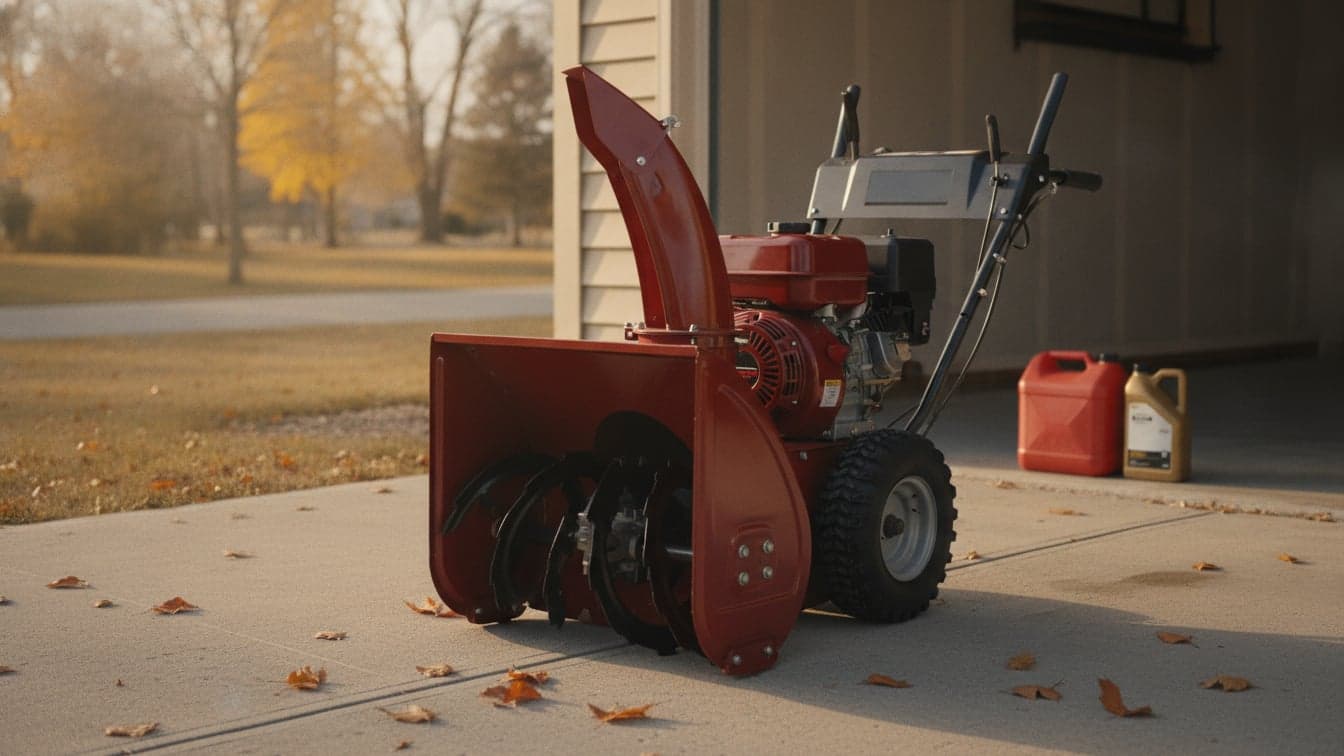
A snow blower is the only machine you own that's expected to start perfectly on the worst morning of the year — in the dark, in the cold, after eight months of sitting untouched in the back of the garage.
That's why snow blower maintenance before winter matters more than almost any other equipment service. A mower that won't start in May is an inconvenience. A snow blower that won't start at 6:30 on a weekday morning, with ten inches on the driveway, is a real problem.
Most of what goes wrong is predictable, and an afternoon in October is enough to catch it, while you still have time and nobody's waiting on the machine.
Guidance below reflects manufacturer recommendations from Ariens, Toro, and Briggs & Stratton, along with safety guidance from the U.S. Consumer Product Safety Commission. Your owner's manual is the final word for your machine.
Start With the Gas That's Been Sitting in There
Every other item on this list assumes the engine runs, so fuel comes first.
Gas that contains ethanol, which is most pump gas, starts breaking down in as little as 30 days. If your snow blower went into storage last spring with fuel in it and no stabilizer, that fuel is now about six months old and likely gummy. Briggs & Stratton's guidance: if the gas in the engine is more than 30 days old, drain it into an approved container and run the engine until it stops.
Then refill with fresh gas. Two things help:
- Buy only what you'll use in about a month. A small can refilled through the winter beats a big can that goes stale by February.
- Add fuel stabilizer to that can. It keeps fuel usable for up to 24 months, depending on the product. Briggs & Stratton also warns against E15 and higher ethanol blends in its small engines. Check your manual for what yours allows.
If you drained the tank dry last spring, you're already ahead. Fill it fresh and move on.
Oil and Spark Plug: The Ten-Minute Basics
Oil. Ariens recommends changing the oil at least once a season, or every 25 to 50 hours of running time. A brand-new machine gets its first change after about 5 hours of break-in. If you didn't change it last spring, do it now. Oil costs about $6 to $10 a quart, and most snow blowers take less than one. Use the grade your manual lists; many call for a thinner winter weight.
Check the level before every storm, not only once a year. It takes thirty seconds, and running low is how small engines get ruined.
Spark plug. A worn plug makes a cold engine harder to start, and cold starts are the job. Ariens suggests replacing it every couple of seasons or 100 hours, whichever comes first. Looking at it every fall is a reasonable habit. A new plug usually costs under $10.
Shear Pins: Buy Spares Before You Need Them
On many two-stage snow blowers, the auger is attached to the gearbox with shear pins (also called shear bolts). They're designed to snap when the auger hits something it shouldn't, like a newspaper frozen into the snowbank or a chunk of ice at the end of the driveway. The pin breaks so the gearbox doesn't.
A broken pin means the machine did its job. It also means the auger won't turn until the pin is replaced, which tends to happen mid-storm, when stores are closed or sold out.
- Buy spares now, made for your specific model. They cost a few dollars apiece. Many owners keep a small bag of them taped or zip-tied to the machine's handle.
- Never substitute a regular hardware bolt, not even "just for tonight." A standard bolt is stronger than a shear pin, so when the auger jams, something expensive in the gearbox breaks instead.
- Not every model uses them. Toro's two-stage machines, for example, use a gear case built without shear pins. Your manual will tell you.
Belts, Tires, and the Parts That Touch the Ground
A few quick checks with the engine off:
- Belts. Most two-stage machines have a drive belt and an auger belt behind a cover. Cracking, fraying, or glazing (a shiny, hardened surface) means a belt is worn. If the auger slows down or stops under load while the engine keeps running, a belt is often slipping. Adjusting or replacing belts involves opening up the machine, and it's a reasonable job to leave to a shop.
- Tires. Check the pressure against the number on the tire's sidewall. Uneven pressure makes the machine pull to one side.
- Scraper bar and skid shoes. These are the metal strip along the bottom and the two runners on the sides. They're designed to wear down. If they're worn thin, replacing them protects the housing behind them.
- Control cables. Squeeze each lever. If one feels stiff or doesn't spring back, it needs lubrication or adjustment before winter.
The Test Run: Outside, Before It Snows
Once the fuel, oil, and plug are sorted, start the machine. Do it outside, and never in the garage, even with the door open. Snow blower exhaust contains carbon monoxide, and a garage fills up faster than most people expect.
Let it run for a few minutes, then engage the auger and the drive. You're looking for a smooth idle, an auger that spins freely, and wheels that pull evenly. Sputtering, surging, or an engine that only runs with the choke on usually points to the carburetor, and October is a much better time to learn that than January.
One Safety Rule That Isn't Optional
This isn't maintenance, but it's the most important thing in this post.
Never clear a clogged chute or auger with your hand. Not with gloves, and not with the engine off. The impeller inside the chute can hold tension when it's jammed with snow. When you loosen the clog, it can spin again even after the engine has stopped. A study of U.S. emergency room data from 2008 to 2017 found more than 29,000 hand injuries from reaching into snow blowers, and about 22 percent of them were amputations.
The CPSC's guidance: shut off the engine, wait for all moving parts to stop, and clear the clog with a stick, a broom handle, or the clean-out tool that came with the machine. If you can't find that tool, find it now. Clip it to the machine so it's there during the storm.
When to Take It to a Shop
Handing the whole list to someone else is a perfectly good plan, as long as you do it early. Small engine shops fill up as soon as snow shows up in the forecast. A 2026 pre-season tune-up typically runs about $60 to $120 for a single-stage machine and $80 to $200 for a two-stage. That usually covers oil, plug, fuel system, shear pins, a belt inspection, and adjustments.
Take it in, rather than trying to nurse it through, if it won't start on fresh fuel, surges or stalls, makes grinding noises from the gearbox, or has a belt that needs replacing.
The same fuel habits apply to your mower, as covered in our end-of-season mower guide. For the rest of the house, see the fall home maintenance checklist.
Make Snow Blower Maintenance Before Winter a Standing Reminder
Nothing prompts snow blower maintenance before winter. The machine sits quietly all fall, and the first reminder is usually the storm itself.
Add your snow blower to Mintain under the Yard category and pick from the Snowblower templates: Engine Oil Change, Spark Plug Inspection / Replace, Auger Shear Pin Inspection, Drive Belt Inspection, and Fuel Stabilizer / Tank Drain (Spring). Set the annual ones for early October. Mintain will remind you while there's still time to book a shop, not the morning you need the machine.
Free for up to 4 items. Pro is $1/month or $10/year if you track more.
Add your snow blower to Mintain at mintain.app →
An afternoon with it in October gives you a snow blower that starts on the first storm of the season. Next week: the furnace tune-up, what a technician actually checks, and why it's worth the appointment.
This is part of Mintain's weekly maintenance blog. Every Monday, we publish a new guide to help you stay ahead of home, auto, yard, and equipment maintenance — so nothing catches you off guard.