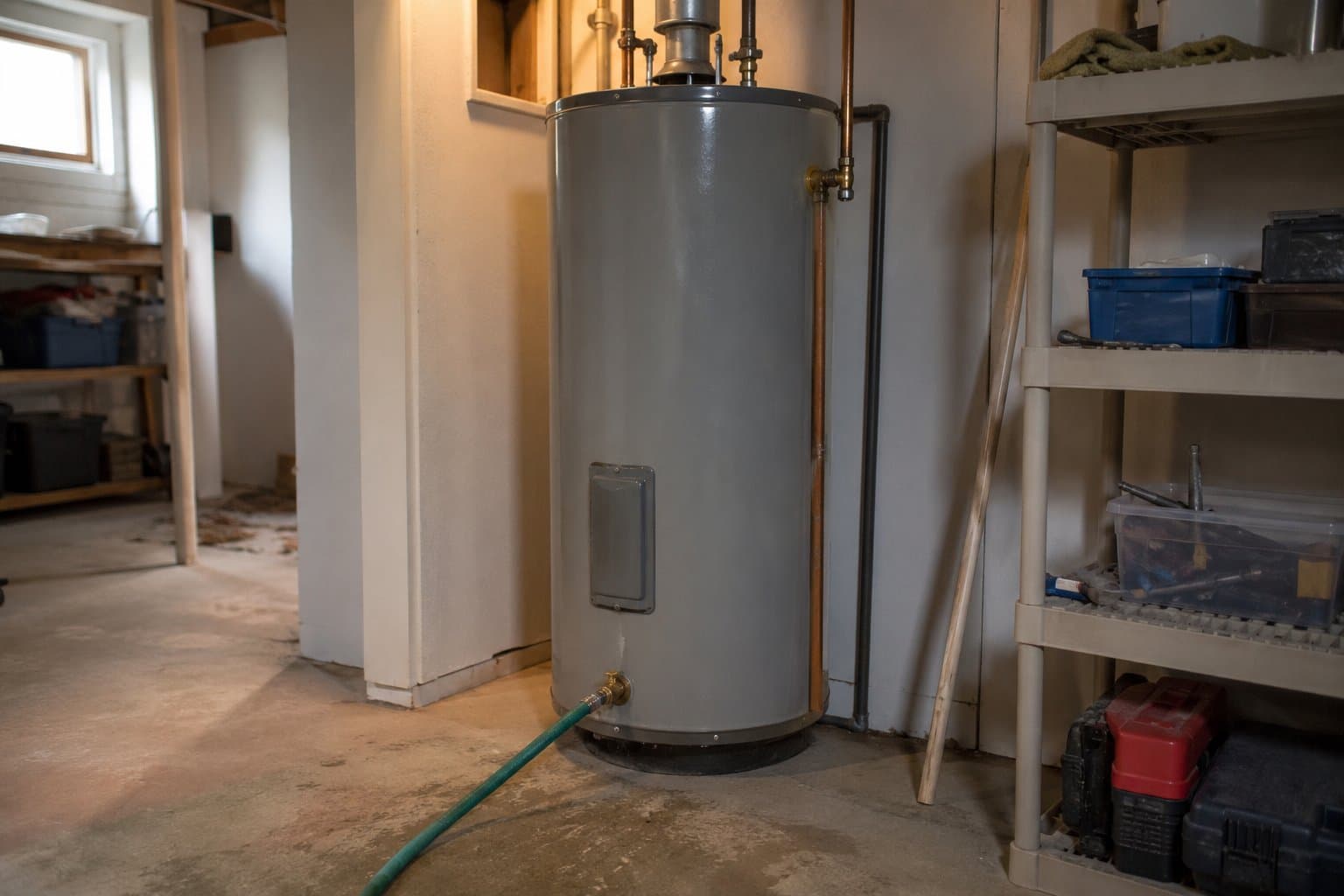
Your water heater is one of the hardest-working appliances in the house, and one of the easiest to forget. It sits in a basement or a closet, does its job without complaint, and gets zero attention — until the morning the shower runs cold, or worse, there's water pooling on the floor.
The good news is that a water heater rarely fails without warning, and a little upkeep goes a long way. A tank left alone quietly runs up your energy bill for years and wears out early. A tank that gets an hour of attention once a year runs cheaper and lasts longer.
These water heater maintenance tips cover the handful of tasks that actually matter — what to do, how often, and where the line is between a simple job and one worth handing to a plumber.
Intervals and figures below reflect guidance from the U.S. Department of Energy, the Consumer Product Safety Commission, and water heater manufacturers. Your owner's manual is the final word for your specific unit.
Why a Neglected Water Heater Costs You Money
Every time your water heater fills, a little sediment — sand, grit, and dissolved minerals from your water supply — settles at the bottom of the tank. Over months and years it builds into a thick layer.
That layer causes two problems. On a gas heater, it sits between the burner and the water like a blanket, so the burner has to run longer to heat the same amount of water — which shows up on your bill. And that trapped heat cooks the bottom of the tank, wearing it out years before its time.
Most tank water heaters last 8 to 12 years for gas models and 10 to 15 years for electric ones. Regular upkeep is a big part of reaching the far end of that range instead of the near one.
Water Heater Maintenance Tips Start With a Yearly Flush
Flushing drains that sediment out before it can pile up. It's the single most valuable thing you can do for your water heater, and for most homes it's a once-a-year job. If you have hard water — common across much of the country — every six months is better.
The task itself is straightforward: you connect a garden hose to the drain valve near the bottom of the tank, shut off the heat, and let the tank empty into a floor drain or outside, which carries the sediment out with it. Done yourself, it costs nothing but an hour and a little care. A plumber will do it for roughly $110 to $200.
When to call a pro. If your tank is several years old and has never been flushed, loosening a thick bed of hardened sediment can reveal a leak at the drain valve or keep it from sealing again — so let a plumber handle that first flush. Same goes if the drain valve won't open, won't close, or drips afterward: stop and call someone rather than forcing it.
Turn the Temperature Down to 120°F
Many water heaters leave the factory set to 140°F, which is hotter than most households need and a quiet drain on your energy bill. The Department of Energy recommends 120°F, and estimates that dialing a tank down to that setting saves the average home $36 to $61 a year — every year, for the life of the heater.
There's a safety payoff too. The Consumer Product Safety Commission recommends no higher than 120°F to prevent scalding, which matters most in homes with young children or older adults, where hotter water can burn skin in seconds. As a bonus, a lower temperature slows the mineral scale that builds up inside the tank in the first place.
The dial is usually on the front of the unit (gas) or behind a panel (electric). One exception: if someone in the home has a weakened immune system, hotter water is sometimes advised to limit bacteria — worth a quick word with your doctor or plumber about the right setting.
If you're chasing lower utility bills more broadly this summer, our guide to keeping your home cool without cranking the AC covers more no-cost adjustments in the same spirit.
Test the Pressure Relief Valve — the Safety One
Every tank water heater has a temperature and pressure relief valve, usually called the T&P valve, mounted on the top or side with a little discharge tube running toward the floor. Its job is to open and release water if pressure or temperature inside the tank climbs too high. It is the part that keeps a water heater from becoming dangerous, and it should be tested once a year.
Testing is quick: with a bucket under the discharge tube, you gently lift the valve's lever for a few seconds and listen for water rushing out, then let it snap closed. Keep your hands and feet clear — the water that comes out is hot.
When to call a pro. If no water comes out when you lift the lever, or if the valve keeps dripping after you close it, it's failing and needs to be replaced — that's a plumber's job, and not one to put off. The same goes if the valve hasn't been tested in five years or more; many plumbers simply replace it at that point rather than trust it. A relief valve isn't a place to gamble. (Overdue safety checks have a way of piling up — our smoke and CO alarm quick check is another five-minute one worth catching up on.)
The Anode Rod: Your Tank's Quiet Bodyguard
There's one more part worth knowing about: the anode rod, a long metal rod that hangs down inside the tank. It's designed to corrode instead of your tank — rust attacks the rod first, sparing the steel walls. When the rod is used up, the tank itself starts to go.
Manufacturers generally suggest inspecting it every few years and replacing it roughly every 3 to 5 years, sooner if you have soft or highly corrosive water. Checking it means loosening a fitting on top of the tank, so it's a step up from flushing — a reasonable one to hand to a plumber during a service visit. We'll cover the anode rod in depth in a future post, because it's the part that most quietly decides how long your water heater lives.
Know When It's Time to Replace It
Maintenance buys years, but no water heater lasts forever. Once a tank is past 10 years old, start watching for the signs it's near the end: rusty or discolored hot water, a rumbling or popping sound as it heats (that's sediment), or moisture and rust around the base. Any water pooling under the tank means the tank itself is leaking, and a leaking tank can't be repaired — it needs replacing, ideally on your schedule rather than the morning it bursts and floods the floor.
A new tank water heater runs about $1,200 to $2,200 installed for a standard model, which is real money — and exactly why the hour a year you spend flushing and checking it is worth it.
Track Your Water Heater in Mintain
The tasks here aren't hard. The hard part is that they come around once a year, from an appliance you never look at, so they're the easiest thing in the house to forget — until it forgets you back.
That's the whole reason Mintain exists. Add your water heater under the Home category and apply the Water Heater Flush (Sediment), Water Heater T&P Valve Test, and Water Heater Anode Rod Inspection templates. You'll get a reminder before each one is due, and Mintain keeps the history, so a year from now you'll know exactly what you did and when — no guessing, no sticky note on the tank.
Free for up to 4 items, so your water heater and a few other things fit at no cost. Pro is $1/month or $10/year if you track more.
Add your water heater to Mintain at mintain.app →
Give it an hour this year, and your water heater will spend the next decade quietly saving you money instead of quietly costing it.
This is part of Mintain's weekly maintenance blog. Every Monday, we publish a new guide to help you stay ahead of home, auto, yard, and equipment maintenance — so nothing catches you off guard.