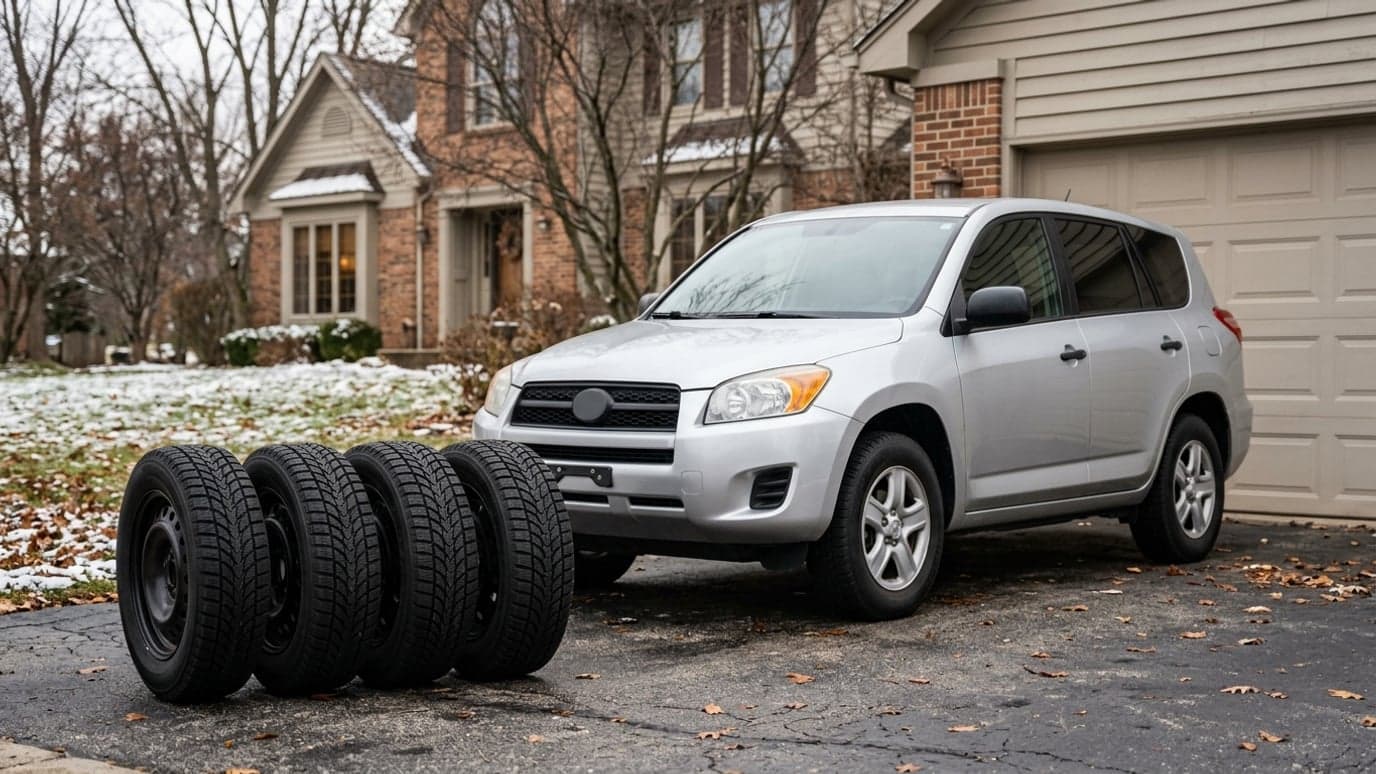
Every fall, someone at the tire counter asks whether you want winter tires, and most of us answer the way we'd answer any upsell: "I think I'm fine." Sometimes that's exactly right. Sometimes it's the most expensive "fine" you'll say all year.
The winter tires vs all-season question doesn't have one answer. It depends on where you live, how you drive in bad weather, and how long you're keeping the car. The good news is that the decision comes down to a few honest questions, and nobody needs to be a car person to answer them.
Here's what actually separates the two, where the newer "all-weather" tires fit in, what each choice costs, and how to tell which one belongs on your car.
Guidance below reflects testing and recommendations from Consumer Reports, Kelley Blue Book, Michelin, and current 2026 tire service pricing. Your owner's manual and a tire shop you trust are the final word for your vehicle.
The Difference Is the Rubber, Not Just the Tread
Most people picture winter tires as all-season tires with chunkier tread. The tread is part of it, but the bigger difference is the rubber itself.
The rubber in all-season and summer tires starts losing its flexibility around 45°F. Below that, it gets harder and grips less, even on a dry road. Winter tires use a softer compound that stays pliable in the cold, plus deeper grooves and thousands of small slits in the tread (called sipes) that bite into snow and ice. Kelley Blue Book puts the payoff at braking distances up to 30 percent shorter than all-season tires in winter conditions.
The tradeoff runs the other way in warm weather. Consumer Reports' testing shows winter tires take longer to stop on dry and wet pavement than all-seasons, and the soft rubber wears quickly once it's warm out. That's why winter tires are a seasonal tire, not a year-round one.
Read the Sidewall: Two Symbols That Look Alike
Tire sidewalls carry two winter-sounding marks, and they mean very different things.
- M+S (mud and snow). This one is based on the tread pattern alone. No snow test is involved, and you'll find it on most ordinary all-season tires. It doesn't make a tire winter-rated.
- The three-peak mountain snowflake. A small mountain outline with a snowflake inside. This means the tire passed a standardized snow traction test. Every true winter tire has it.
If a salesperson tells you a tire is "good in snow," this is how to check. Look for the mountain and snowflake, not the letters.
Where All-Weather Tires Fit
There's now a third option, and it's the one most people haven't heard of. All-weather tires carry the same mountain-snowflake symbol as winter tires, but they're built to stay on the car all year. No spring and fall swap.
Consumer Reports' take: all-weather tires typically don't match dedicated winter tires, but they come close enough for most needs. They grip noticeably better in snow than standard all-seasons, and they skip the faster wear and longer dry-road stops of winter tires. Some cost a bit more than the all-seasons they replace, though skipping two changeovers a year usually makes that up.
Winter Tires vs All-Season: Which One Do You Need?
Consumer Reports' guidance breaks down neatly by how your winters actually go:
- Mild winters, or you stay home until the plows come through. A good set of all-season tires is fine. Pick a model that tested well in snow, and keep an eye on tread depth.
- Real cold and regular snow, but you don't want to swap tires twice a year. All-weather tires are the sweet spot.
- Snowbelt winters, hills, rural roads, or you have to drive no matter what. Dedicated winter tires are your best bet.
A good rule of thumb from Michelin and Kelley Blue Book: if your daily temperatures consistently sit below 45°F for a good part of the winter, winter or all-weather tires earn their place.
About all-wheel drive. AWD helps you get moving from a stop, and that's where its help ends. Consumer Reports' testing found it didn't help with braking or with some cornering situations, and concluded that winter tires matter more than AWD in many cases. A front-wheel-drive car on winter tires can stop and turn better than an AWD SUV on all-seasons. Your drivetrain helps you go. Your tires are what help you stop.
If You Go With Winter Tires
A few rules make the difference between winter tires that work and winter tires that cause problems.
Buy all four. Consumer Reports and Michelin both say winter tires belong on the car in sets of four. Putting them on only two wheels gives the front and back of the car different amounts of grip, which Michelin warns can make the car handle unpredictably and take longer to stop.
Put them on when the temperature, not the calendar, says so. The usual guide is when daily temperatures consistently drop below 45°F (7°C), and back off when they routinely rise above it. Shops get busy once the first snow is in the forecast, so an appointment made in October beats one made in a storm.
Watch the tread earlier than you would on all-seasons. Winter tires lose much of their snow grip at about 6/32 inch of tread, well before the legal minimum of 2/32. Some winter tires even have a second set of wear bars molded in at that depth. Our spring car checkup walks through the quarter test for checking depth at home.
Store the off-season set well. Clean them, then keep them somewhere cool and dry, out of direct sunlight. Many tire shops store them for a seasonal fee if your garage is short on space.
What It Costs
Prices vary with tire size and brand, so treat these as ranges to compare quotes against, not a bill:
- Winter tires: Kelley Blue Book puts a set of four from a major brand at $1,000 or more. Smaller cars with smaller tires usually come in under that.
- Seasonal swap, tires already on their own wheels: about $60 to $80 for all four.
- Seasonal swap, tires remounted on your one set of wheels: about $60 to $200 each time, since every swap means mounting and balancing.
- A second set of wheels: basic steel wheels run roughly $50 to $100 apiece. If your car has tire pressure sensors, ask what a second set adds before you commit.
If you're keeping the car for several years, a dedicated set of wheels usually pays for itself in cheaper swaps, and it saves wear on the tires from being pulled on and off their rims twice a year.
One real offset: while your winter tires are on, your regular tires aren't wearing. Two sets each last longer than one set driven year-round.
When to call a pro: for all of this. Mounting, balancing, and tightening wheels to the right torque is shop work, and so is resetting the tire pressure system after a swap. A good tire shop will also tell you honestly if your current all-seasons have enough tread left for winter.
Let Mintain Track the Swap
The hardest part of winter tires isn't buying them. It's remembering, every spring and fall, to book the swap before everyone else does. That's what Mintain is for.
Add your car in Mintain and use these templates from the Auto category:
- Tire Tread Depth Check: every 3 months. Especially useful on winter tires, where 6/32 inch is the number that matters.
- Tire Rotation: every 6 months or 6,000 miles. Pair it with the swap, since the shop can rotate positions while the wheels are off.
- Tire Pressure Check: monthly. Cold air drops pressure, and we covered why that matters in Tire Pressure Matters More Than You Think.
Then add two custom tasks, Winter Tire Swap On (set for mid-October) and Winter Tire Swap Off (set for early April), each repeating yearly. Use the notes field for your tire size, where the off-season set is stored, and what the shop charged last time, so you can compare next year's quote.
Free for up to 4 items. Pro is $1/month or $10/year if you track more.
Add your car to Mintain at mintain.app →
The right tires for your winter are the ones that match the roads you actually drive. Next week: getting your leaf blower ready for storage before the last leaves fall.
This is part of Mintain's weekly maintenance blog. Every Monday, we publish a new guide to help you stay ahead of home, auto, yard, and equipment maintenance — so nothing catches you off guard.