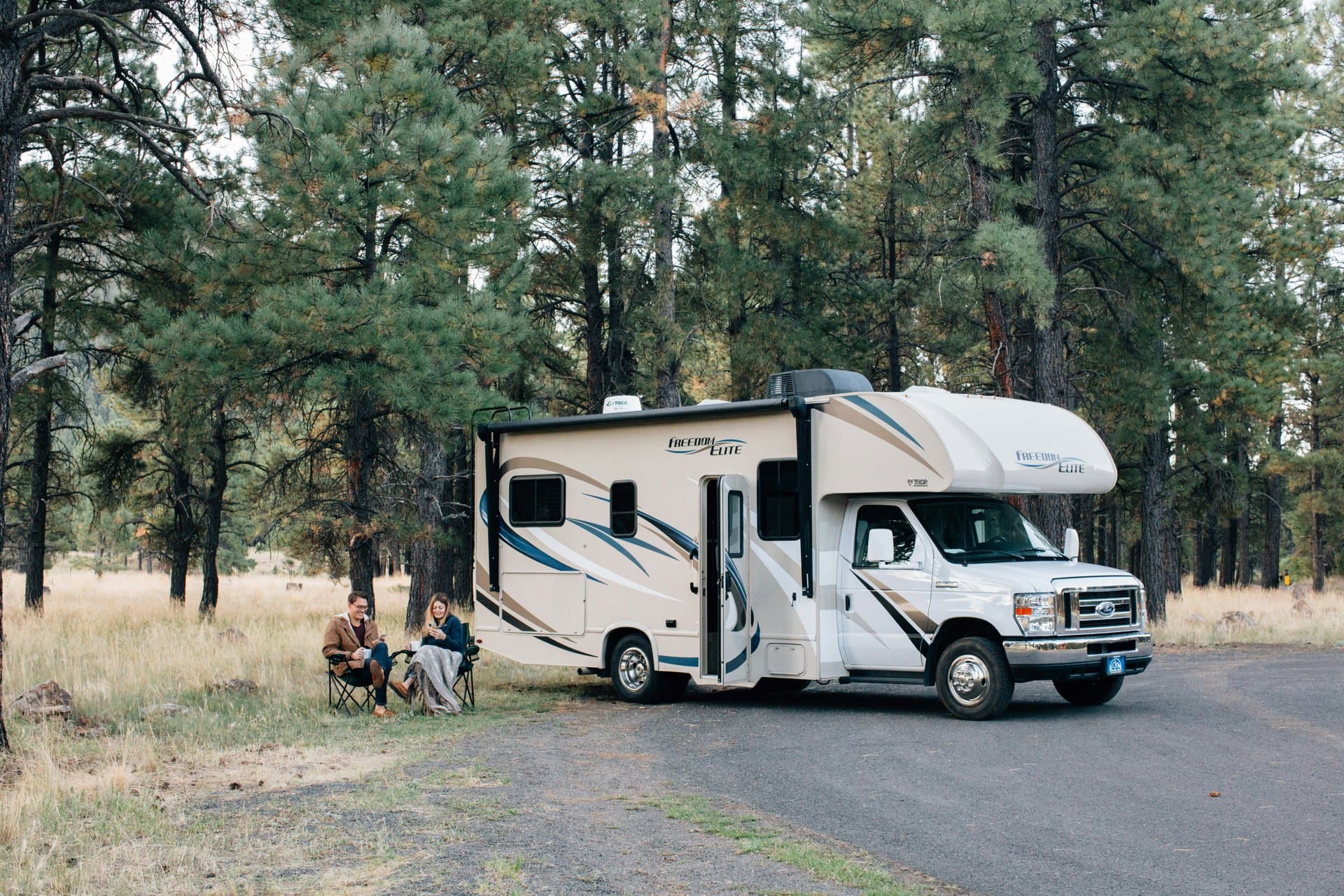
The RV is loaded, the cooler's in, and you're an hour behind schedule. The last thing you want to do is walk around the rig with a tire gauge. That's exactly the walk-around that keeps a holiday weekend from turning into a wait on the shoulder of the highway.
A good RV pre-trip inspection takes about 15 to 20 minutes and heads off the three things most likely to strand you: a tire failure, a brake or hitch problem, and a propane or seal issue you couldn't see from the driver's seat. None of it requires tools beyond a tire gauge and, ideally, a torque wrench.
This RV pre-trip maintenance checklist covers what to look at before every road trip — and which of those checks deserve a closer, deeper look at the start of the season or before a long haul.
Intervals and safety guidance below reflect recommendations from tire manufacturers (Goodyear, Michelin, Carlisle), the published guidance of established RV service publications, and standard towing-safety practice. Your owner's manual and the placards on your specific rig are the final word.
Your RV Pre-Trip Maintenance Checklist Starts With the Tires
More roadside RV failures trace back to tires than to anything else, and two separate things matter — how full they are and how old they are.
Pressure — check every trip, when the tires are cold. RV tires run at much higher pressures than your car's, often 65 to 110 PSI depending on the rig and how it's loaded. The correct number isn't a guess: it's on the tire's sidewall (maximum) and on the placard inside a cabin door or storage compartment (recommended for your loaded weight). Check all of them, including the spare, before you've driven anywhere — rolling warms the tire and raises the reading, which throws off the number. We covered why pressure matters and why the warning light triggers too late in Tire Pressure Matters More Than You Think; RVs make every point in that post bigger, because the loads are heavier.
Age — check at least once a season. This is the one most RV owners miss. Tire manufacturers recommend replacing RV and trailer tires roughly every 5 to 7 years regardless of how much tread is left. RVs sit for months at a time, and rubber degrades from age, sunlight, and sitting still far faster than from miles. Michelin advises a professional inspection at five years and replacement by ten at the latest. Find the date code on the sidewall — a four-digit DOT stamp where the first two digits are the week and the last two are the year (so "2422" means the 24th week of 2022). If your tires are past five years, have them looked at; past seven, plan to replace them even if they look fine.
Lug nuts — check before every trip, re-check after the first stop. Road vibration backs lug nuts off over time, and trailer wheels are especially prone to it. If you have a torque wrench, confirm each one is at the spec in your manual. After a tire change or rotation, re-torque after the first 50 to 100 miles — wheel studs loosen most in those early miles.
Fluids and the Engine (Motorhomes)
If you drive a motorhome, the chassis is a vehicle like any other and gets the same quick under-hood look before a trip.
- Engine oil — check the dipstick when the engine is cold and level. Motorhome engines often go longer between oil changes by time than by miles, so the once-a-year change matters even if you barely drove.
- Coolant — check the level in the overflow reservoir. Never open a hot radiator cap; pressurized coolant will spray and burn.
- Brake fluid and power steering — a glance at the reservoirs for level and clarity.
- Belts and hoses — look for cracks, fraying, or soft spots, which show up more after a long sit than after steady use.
If a dashboard warning light is on, sort out what it means before you leave — a motorhome dash speaks the same language as a car's, which we broke down in What's That Dashboard Light? A Plain-English Guide.
Battery — House and Chassis
Most motorhomes have two battery systems: a chassis battery that starts the engine and one or more house batteries that run the lights, water pump, and appliances. Both can quietly drain during storage.
Put a meter on each one. A fully charged 12V battery reads 12.6 to 12.8 volts at rest. Below 12.4 after a full charge means the battery has weakened. Clean any white or blue-green corrosion off the terminals with a baking-soda-and-water solution and a wire brush, and make sure the connections are snug. A loose ground is a common reason things "work intermittently" once you're on the road.
Propane System
Propane runs the fridge, stove, furnace, and water heater, and a leak is the one item on this list with safety stakes high enough that you don't skip it.
Before a trip, look the system over: check the tank level, and inspect the regulator and any visible lines for cracking, corrosion, or damage. To check for leaks, brush a 50/50 mix of dish soap and water onto the connection points with the gas turned on — bubbles forming means gas is escaping, and the rig should not be used until that connection is repaired. Never use a flame to check for a leak.
Two habits worth keeping: travel with the propane turned off at the tank unless you specifically need an appliance running, and make sure the LP/CO detector inside the RV is working before you go. Those detectors have a replace-by date stamped on them the same way home alarms do — if yours is older than its rating, replace it.
When to call a pro: any leak that soap-testing finds at a fitting you can't simply tighten, a regulator that's more than 10 to 15 years old, or a detector that alarms with no obvious cause. An RV service tech can pressure-test the whole system — typically $75 to $150 — and that's the right call if you smell gas and can't locate the source.
Roof Seals
Water getting in through a failed roof seal is the slow, expensive RV problem — by the time you see a stain inside, the damage underneath is usually well along. The roof itself isn't a before-every-trip item, but it's an easy one to forget entirely.
Inspect the sealant around every roof penetration — vents, the antenna, the AC unit, skylights, and along the edge seams — about every three months and before any long trip. You're looking for sealant that has cracked, pulled away, gone chalky, or lifted at the edges. Small touch-ups with the matching RV sealant are manageable for most owners who are comfortable on a sturdy ladder. A full reseal is generally needed every few years depending on climate and sun exposure.
When to call a pro: if you find soft spots in the roof decking, staining on an interior ceiling, or widespread sealant failure, get it looked at before the next trip rather than after. Getting on an RV roof is itself a fall risk — if you're not steady on a ladder, this is a reasonable one to hand off. RV shops handle roof inspections and resealing as routine work.
Water and Waste Systems
Before the season's first trip, sanitize the fresh water system — a diluted bleach solution run through the tank and lines, then flushed — so your drinking water is clean after months of sitting. Before each trip after that:
- Confirm the fresh water tank is filled (or empty, if you're filling on the road) and the pump runs and holds pressure.
- Check that the gray and black tank valves are closed and were dumped and rinsed after the last trip.
- Look under the sinks and around the water heater for drips or dampness.
Hitch and Towing (Travel Trailers and Fifth Wheels)
If you tow, the connection between the trailer and the truck is where a mistake becomes a serious one. Run this every single time you hook up:
- Coupler seated and latched onto the ball, with the latch pinned or locked.
- Safety chains crossed underneath the coupler in an X and attached to the truck — crossed so the tongue is cradled if it ever drops.
- Breakaway cable connected to the truck (not to the safety chains), so the trailer brakes apply if it ever separates.
- Weight distribution and sway control set up and tensioned, if your setup uses them. A general guideline: a trailer that weighs 50% or more of your tow vehicle, or roughly 5,000 pounds and up, benefits from a weight distribution hitch, with tongue weight around 10 to 15% of the loaded trailer weight.
- Lights — running lights, brake lights, and turn signals all working, confirmed with a helper.
- Trailer brakes responding, and the brake controller in the truck set.
When to call a pro: trailer wheel bearings should be inspected and repacked about once a year or every 12,000 miles — a failed bearing can seize a wheel at highway speed. If you can't remember the last time yours were done, have a shop handle it before a long trip. Setting up a weight distribution hitch for the first time is also worth having done correctly once so you know what "right" looks like.
Track It in Mintain
A pre-trip walk-around is a habit. The deeper items — the ones measured in months and years, not trips — are what slip, because there's no chirp or warning light to remind you. That's the part Mintain handles.
Add these templates to your RV in Mintain:
- Tire Inspection & Pressure Check — every 3 months (and note your tires' DOT date code in the notes field so the 5-to-7-year clock is right there)
- Propane System Inspection — annually
- Roof Seal Inspection & Resealing — annually
- Battery Service (House & Chassis) — every 6 months
- Engine Oil & Filter Change — annually / 5,000 miles
- Fresh Water System Sanitization — every 6 months
Store your tire pressures, propane detector replace-by date, and the sealant type you use in each template's notes field — so the next pre-trip check is a confirmation, not a research project. And if you have a boat in the driveway too, the same approach works; our spring boat commissioning checklist covers that side.
Start tracking your RV maintenance for free at mintain.app →
Twenty minutes in the driveway is the cheapest insurance you'll buy all season. Do the walk-around, then go enjoy the trip.
This is part of Mintain's weekly maintenance blog. Every Monday, we publish a new guide to help you stay ahead of home, auto, yard, and equipment maintenance — so nothing catches you off guard.